
A Quiet Town That Shaped a Nation
Women’s Rights National Historical Park

June 29, 2025
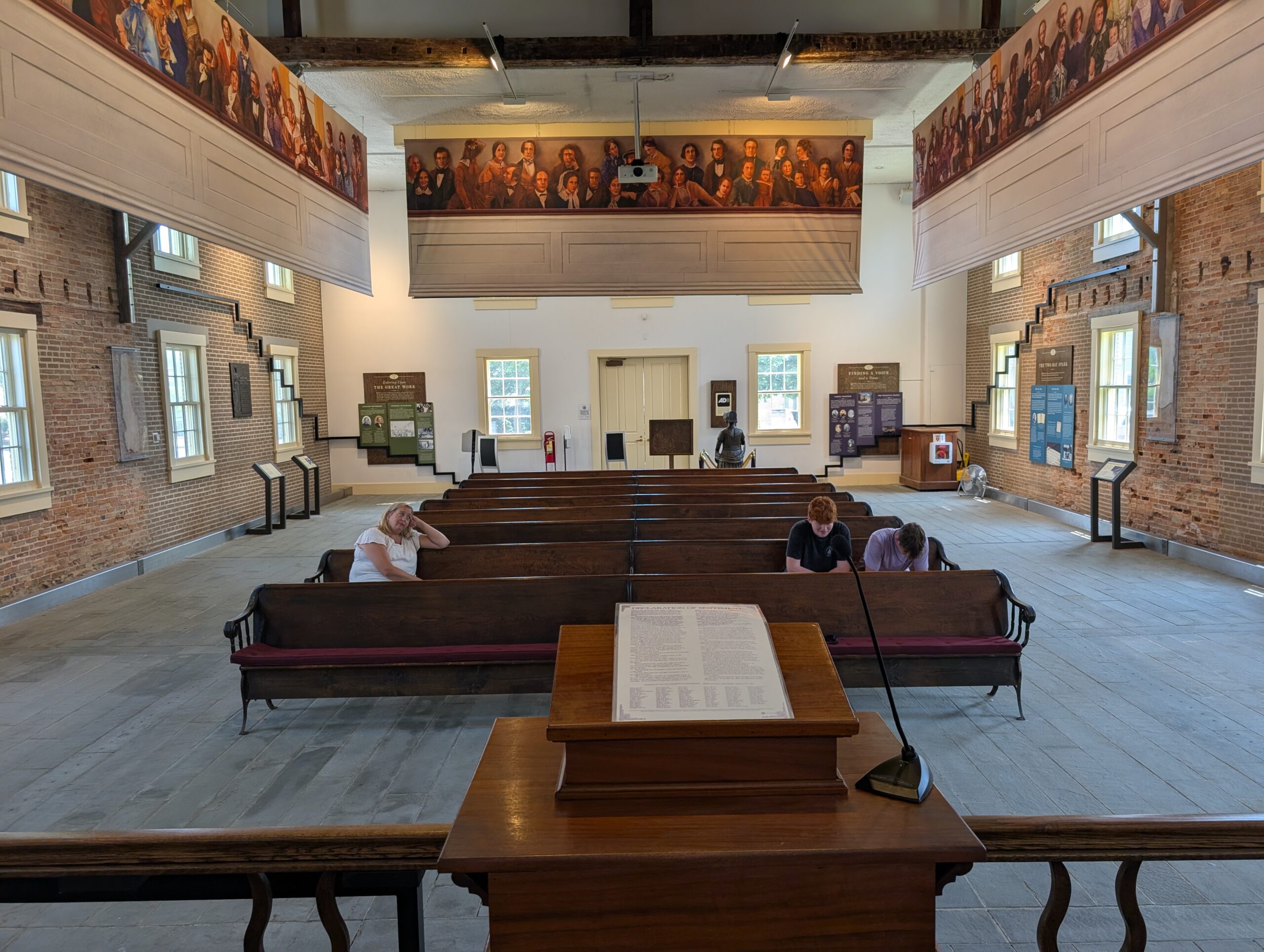
Women’s Rights Park tells a story many of us forget to explore. As men, we rarely think about the women’s suffrage movement unless we’re intentional about it. It doesn’t get the mainstream attention of other American struggles like slavery or civil rights, but it should. Especially when you stand on the floor where the first formal call for women’s equality in the U.S. echoed through a meeting house in Seneca Falls, New York, home to the Women’s Rights Park.
I started this trip by flying into Rochester, where I have family, Steve and Carol Henry, who hosted hosted me over the years and gave me a base to coordinate my adventures. Seneca Falls is about an hour east down Interstate 90. Blink, and you might miss it. It’s a small, quiet town, not screaming for attention, but quietly holding some of the most important chapters in our history.
The Women's rights Park
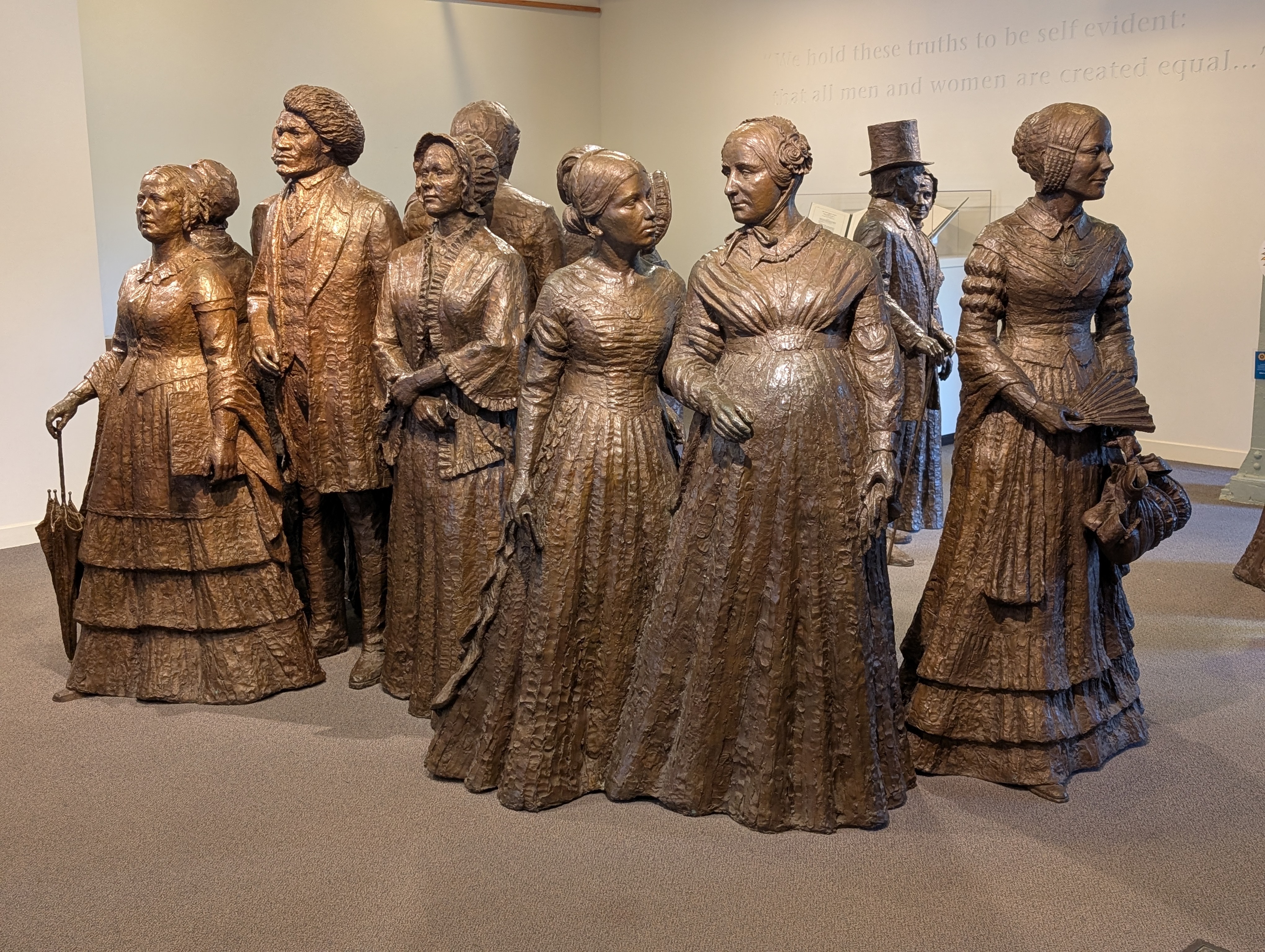
Right on the town’s main street sits the Women’s Rights Park. The red-brick building, trimmed with yellow shutters, looks modest from the outside, but inside it holds stories that reshaped the American conscience. You’re greeted almost immediately by a powerful exhibit, bronze statues of key figures in the movement, men and women alike. They stand mid-conversation, as if still arguing for the rights so many take for granted today. That’s the part that caught me. These weren’t just stories from long ago. These were debates that still echo. The museum itself is compact, two stories, open design, and very walkable. But what it lacks in size, it makes up for in impact. The walls are filled with timelines that trace the fight for women’s rights: the battle for property ownership, for wages, for autonomy, for something as basic as voting. In 2020, we marked just 100 years since women gained that right in the U.S., a blink of an eye in the grand scheme of things.
The 1848 Seneca Falls Convention
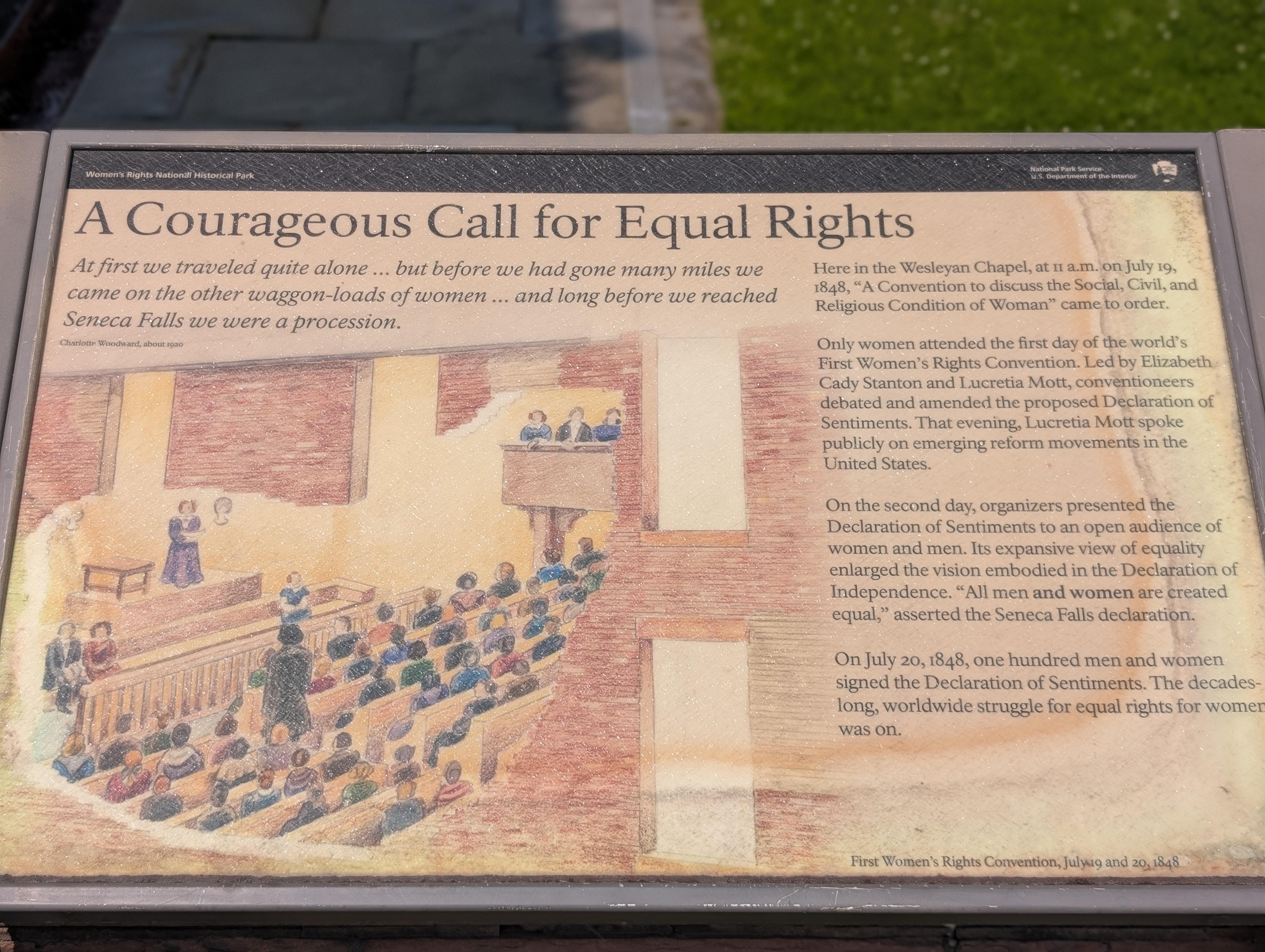
The Seneca Falls Convention of 1848 was the first women’s rights convention in the United States. Elizabeth Cady Stanton, Lucretia Mott, and others organized it. More than 300 people attended, including Frederick Douglass, one of the few men who stood with the women on every point, especially on the then-radical demand for suffrage. Stanton and Mott, both seasoned abolitionists, felt galvanized after being denied seats at the World Anti-Slavery Convention in London. Their frustration turned to action. In Seneca Falls, they drafted the Declaration of Sentiments, a bold and revolutionary document modeled after the Declaration of Independence. “We hold these truths to be self-evident: that all men and women are created equal.” It wasn’t just prose, it was a challenge to the status quo.
They listed 18 specific grievances, from the inability to vote, to being barred from higher education, to the legal authority husbands held over wives. These injustices formed the backbone of the women’s rights movement. What struck me most was that even then, the right to vote almost didn’t make it into the final document. It was seen as too radical, too far. But Douglass stepped in, giving a passionate defense of suffrage that helped secure its place. Standing in the building where those words first echoed, I couldn’t help but feel the weight of that moment. They weren’t just arguing for change, they were rewriting the American promise.
A Personal Moment of Reflection
Harriet Tubman is one of my heroes. Visiting her home and grave earlier on this trip had already left me thinking about the role of women in shaping our country, not just white women, but Black women too. Women like Tubman didn’t just demand rights. They embodied them. They took risks. They broke rules. They lived freedom so that others could have a taste of it. In Seneca Falls, her spirit lingered too. This fight wasn’t just about white women. It was about all women. And it still is. I walked those museum halls thinking about my sons. They’ve heard me talk about this stuff, Tubman, Mott, Stanton, for years. They’ve seen me fired up over history most people brush past. But on this day, it wasn’t about me.
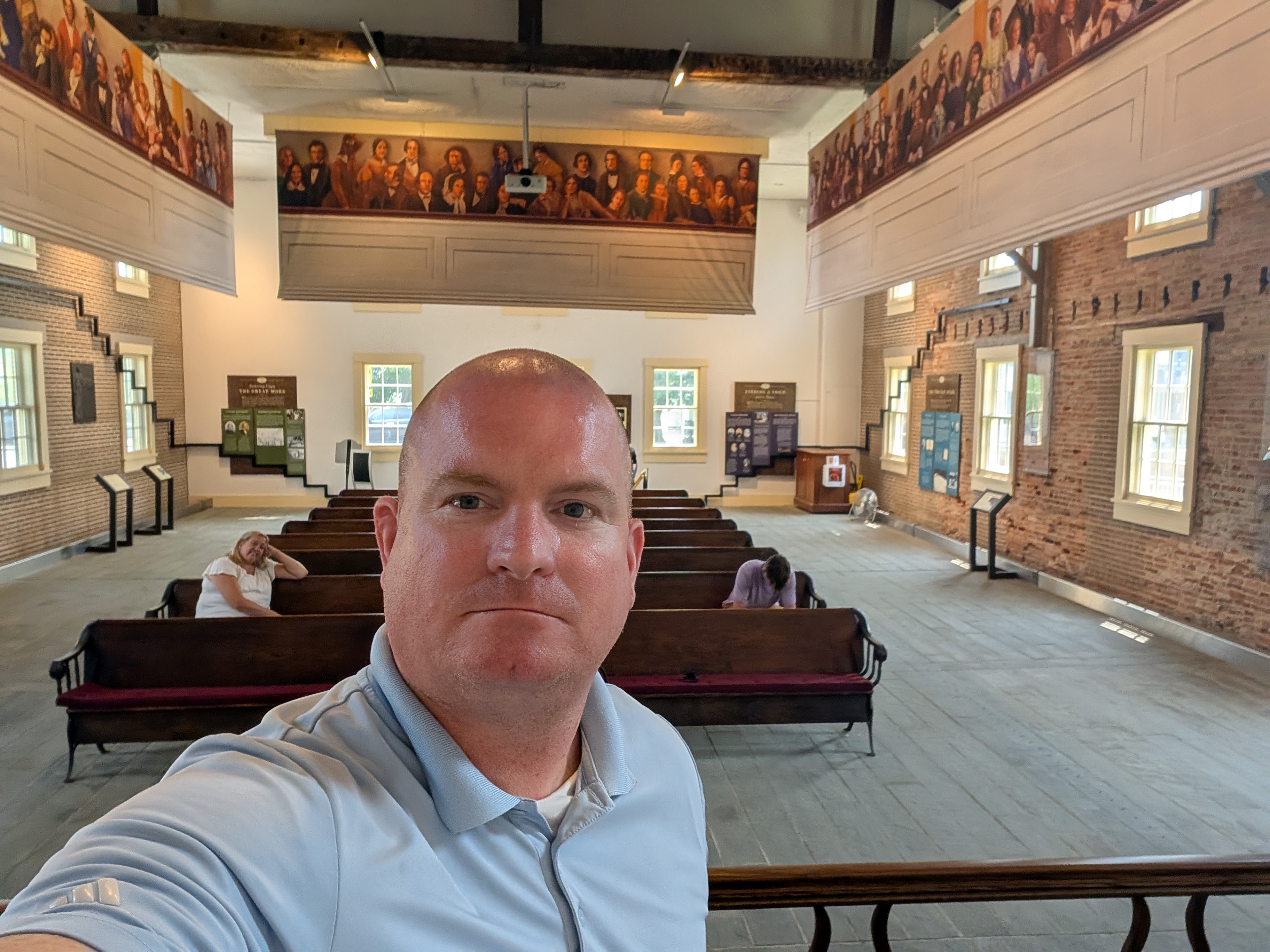
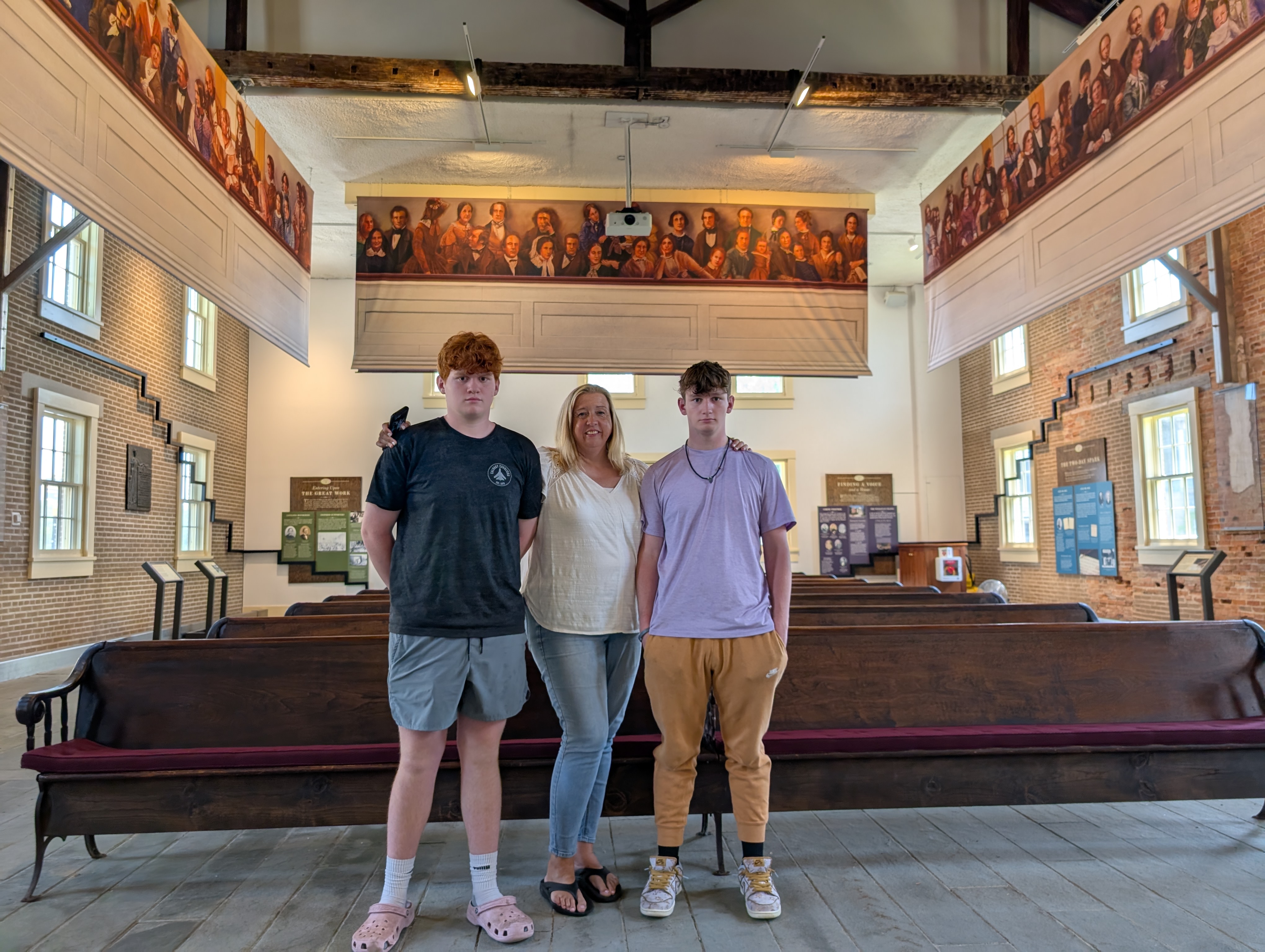
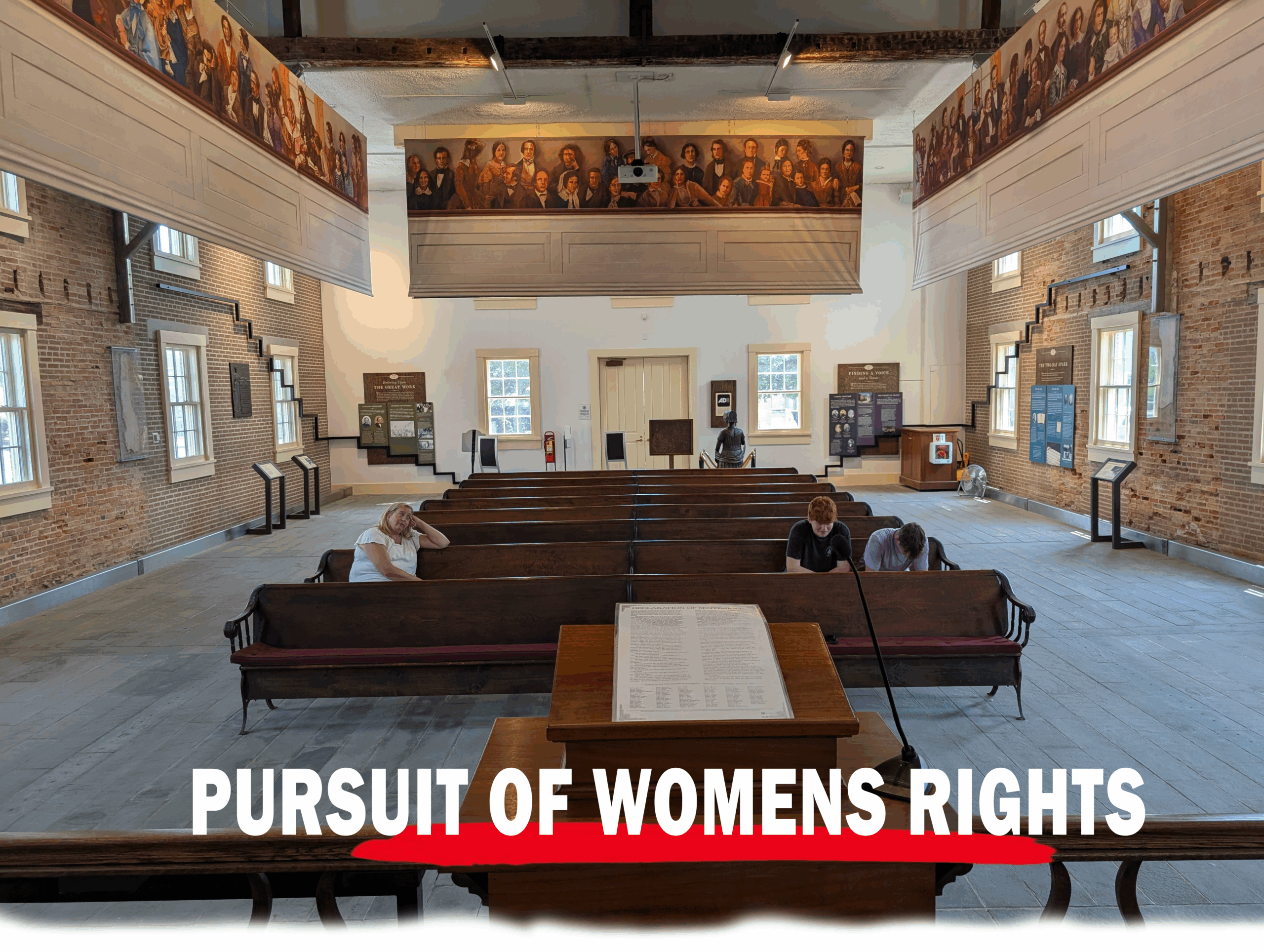
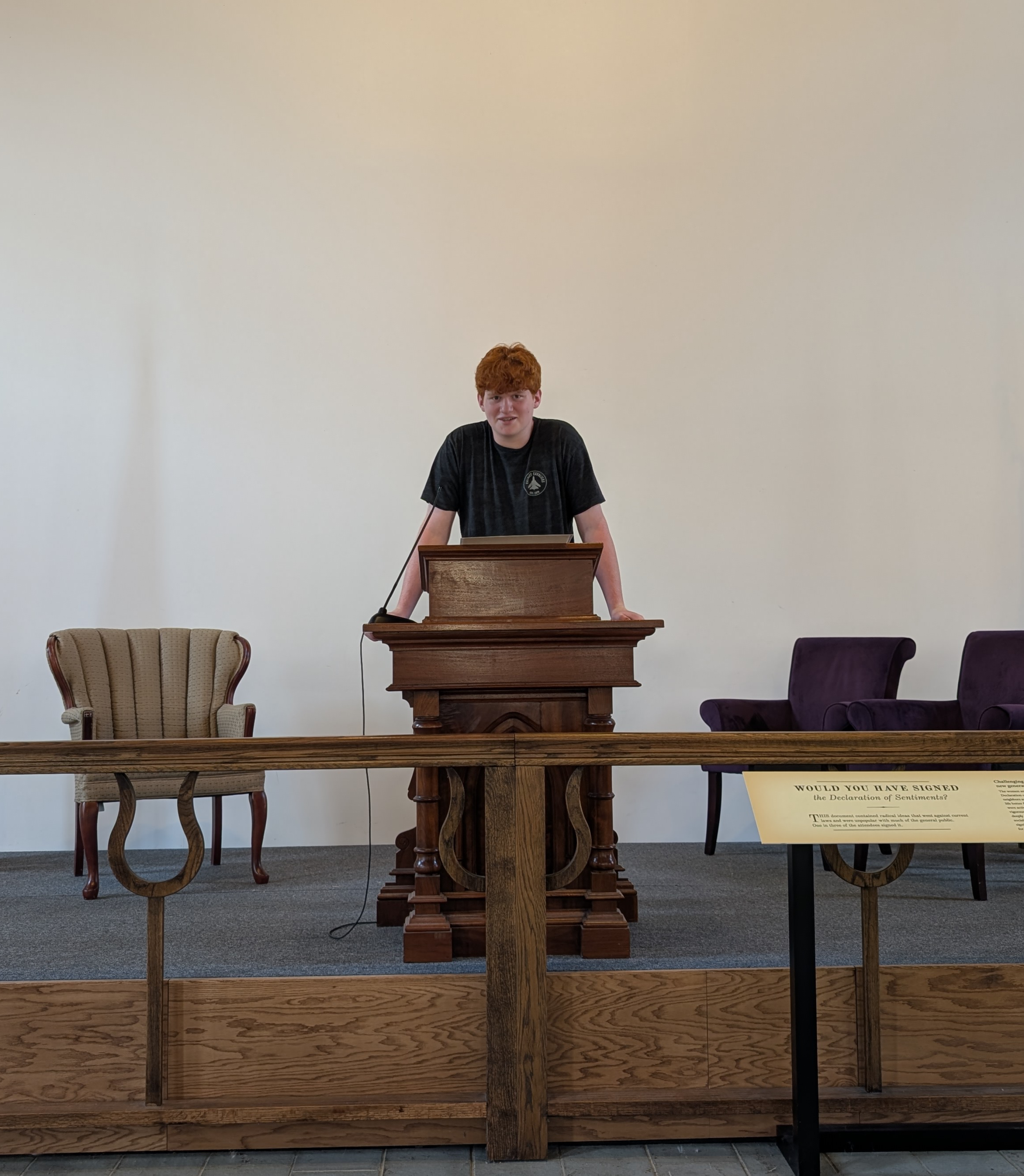
Inside the Wesleyan Chapel, the original site of the 1848 convention, the podium still stands. A symbol. A pulpit. A relic of rebellion. My son, Remington, stepped up onto that stage without me saying a word. He stood behind that old podium and read the entire Declaration of Sentiments aloud to me. Every word. Every line. As if it were his own call to action. I sat in the front pew of that church, the wooden bench worn by time and memory, and looked up at my son. I didn’t see just him. I saw the ghosts of heroes standing around him, Stanton, Mott, Douglass. I saw them listening. I saw them proud. It’s not every day your kid teaches you something without trying to. But that moment? That was the whole damn reason we travel. To see, to feel, to pass something on.
Final Thoughts
The Women’s Rights Park isn’t flashy. It’s not big. But it’s one of those places that stays with you long after you leave. Not just because of what happened there, but because of how much of it still applies. We love to visit battlefields and monuments. We glorify our struggles and our victories. But this fight, this one for equality, for basic dignity, deserves the same attention. Maybe more. And if you’re lucky, like I was, you’ll get to watch your child step into history, not just read it. That’s a victory worth traveling for.
If you would like to read more about my travels, check out StayAmerican.org