

Manitou Cliff Dwellings: History and Ethics
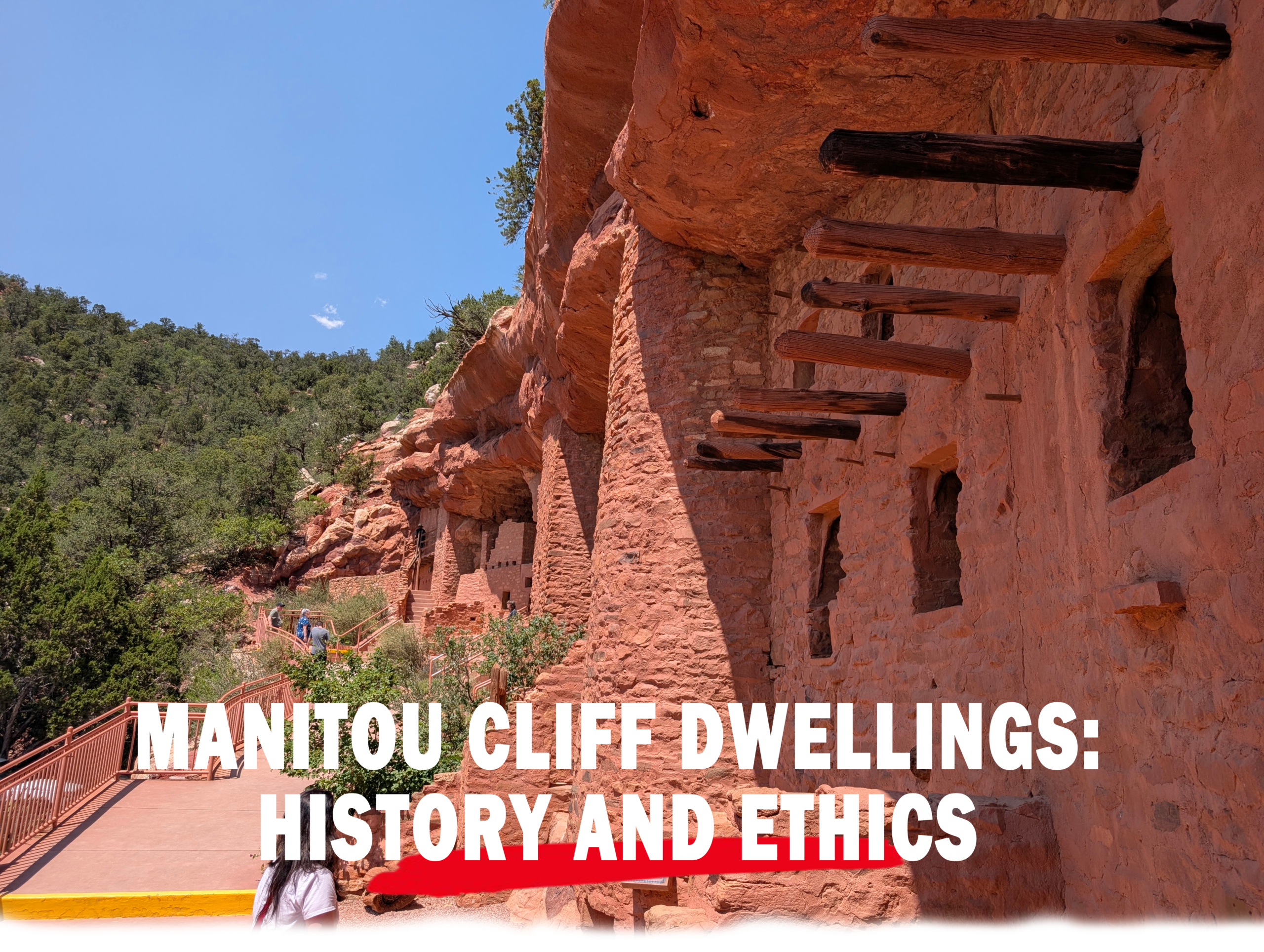
Manitou Cliff Dwellings: History and Ethics
The stone is real. The location isn't.

Published August 10, 2026
This “Ancient” Site Was Built in 1907
Here we are, standing over a fire pit that hasn’t held a real fire in over a century, at a place called the Manitou Cliff Dwellings. A ladder leads down into it, and the path in runs you straight through where the smoke would have risen. This is a kiva, the round stone chamber where elders and families once gathered to make decisions and speak to their gods. Entering through the rising smoke was believed to cleanse a man before the ceremony began. A small hole near the firepit, the sipapu, marked the doorway to the spirit world itself.
You’d think a room like that would stop people in their tracks. It doesn’t, not really. A family walks past below me, glances down, snaps a photo, and keeps moving. Fifteen seconds, if that. I don’t blame them. There’s no placard that tells you what actually happened in this room. But standing over it, you start to feel something you didn’t expect to feel at a roadside attraction off a Colorado highway. This wasn’t just a fire. It was a door to the sky.
Then comes the twist that changes everything else about the Manitou Cliff Dwellings: none of this was built here. Every stone under your feet was quarried, shaped, and stacked three hundred miles away, then torn apart and rebuilt on this exact spot in the early 1900s. What looks like an untouched ancient ruin is something stranger, a genuine sacred structure standing in the wrong place entirely.
The Allure of a Site That Shouldn’t Work, But Does
Finding your way to the truth about the Manitou Cliff Dwellings isn’t really about the drive out from Colorado Springs. It’s about sitting with a contradiction most visitors never get handed: the stone is real, the location is not, and somehow the place still feels sacred anyway. That tension is exactly why I wanted to understand this site before I ever stepped foot on it, and why I think it deserves more than a quick photo and a drive-by.
Before I even reached the kiva, the place had already gotten me. Walk into the middle of the dwellings for the first time and you’ll do what I did, stop, look left, then right, and just take it in. Tourists climbed ladders around me, cameras out. I’d brought a friend, Kristen, freshly transplanted to Colorado Springs, who’d never seen anything like it. She barely said a word the whole walk through. Some places do that to you.
Getting to the Manitou Cliff Dwellings and What to Expect
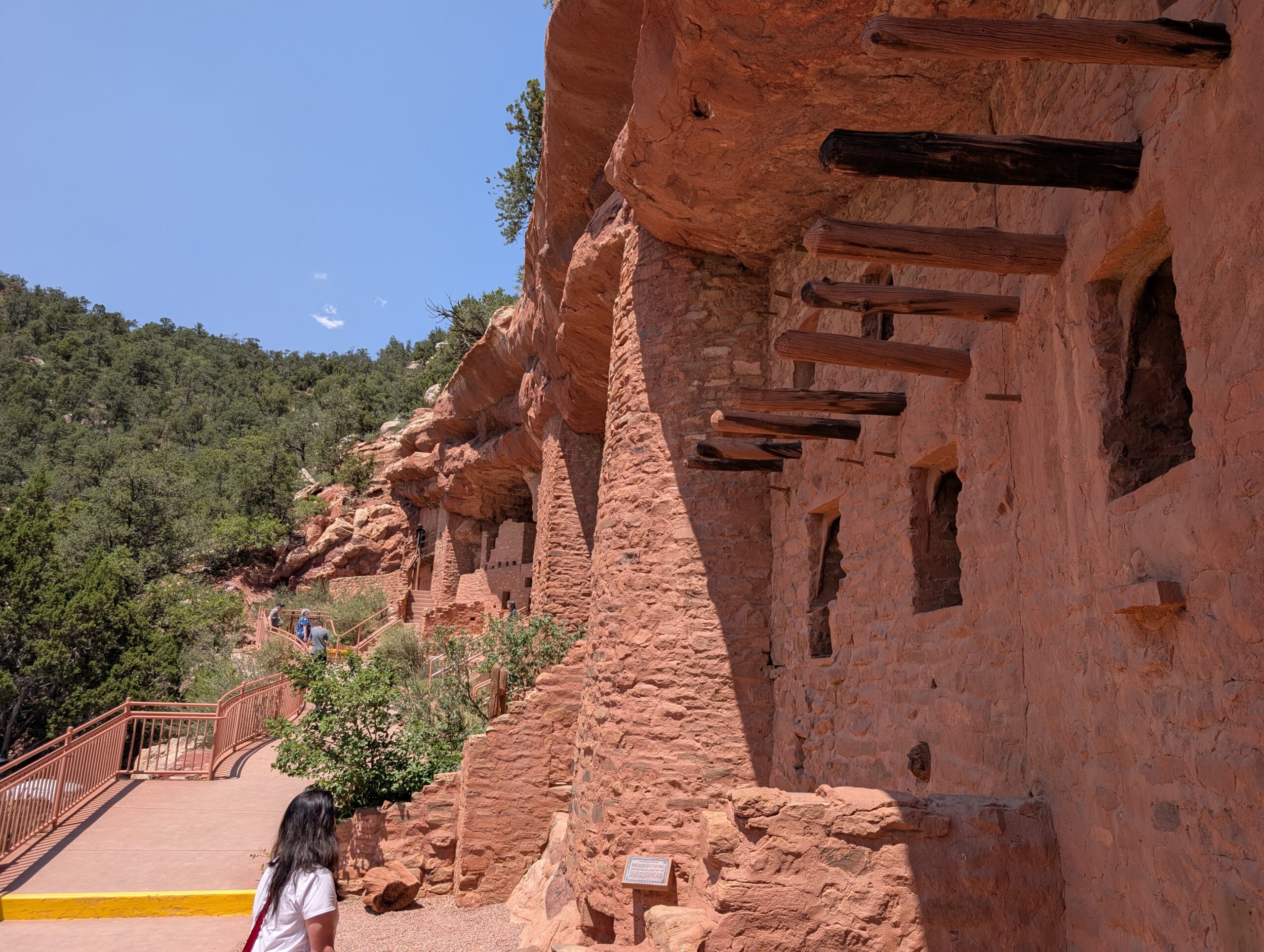
The site sits five miles west of Colorado Springs, just off US Highway 24, in the town of Manitou Springs. You can’t miss the entrance, a red sandstone archway right off the road. Standard admission runs $12.75 a person, with a modest military discount if you’ve served. Hours shift with the seasons, generally 9 a.m. to 5 p.m. from spring through fall and shorter in winter, to check the current schedule before you drive out. On site you’ll find two museums, a gift shop, and a picnic patio, plus a snack bar that runs seasonally.
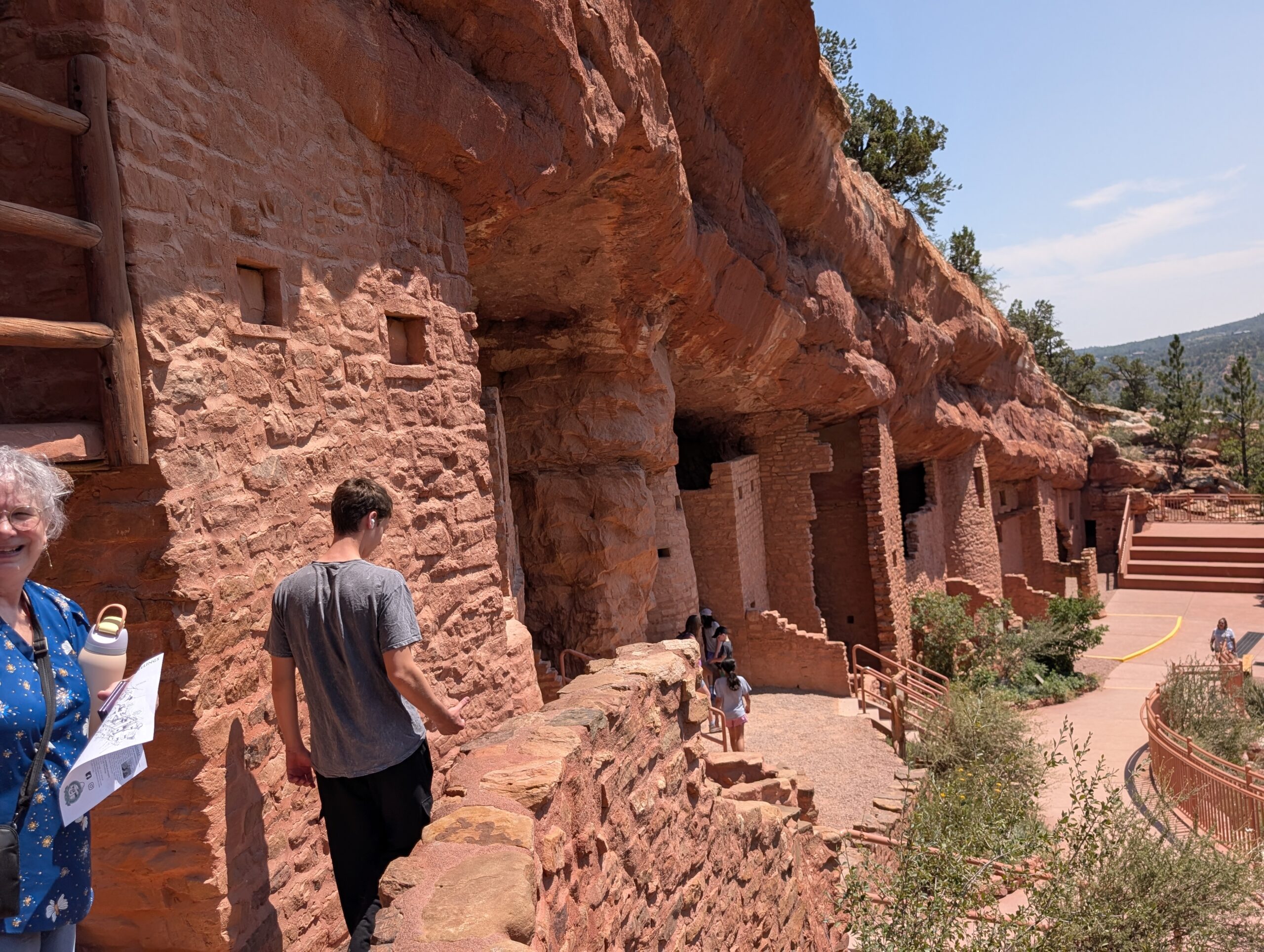
Give yourself an hour, more if you actually read every exhibit panel, which I’d recommend. The whole thing is self-guided, and nothing stops you from climbing every ladder and ducking through every doorway. These rooms were built for smaller people, and I am not a small person, so I spent a good chunk of my visit folding myself through openings clearly cut for someone half my size. Humbling in a way no museum case manages. Pair the stop with a wider Colorado Springs itinerary, Garden of the Gods sits close by, and honestly, the drive out from Denver or Cortez makes a solid case for treating this as one leg of a longer Southwest archaeology run rather than a standalone errand.
The Real History Behind the Manitou Cliff Dwellings
The story of the Manitou Cliff Dwellings actually starts far from Manitou Springs, in McElmo Canyon near present-day Cortez, in the far southwest corner of Colorado. Ancestral Puebloan people built the original structures there sometime between 1100 and 1300 CE, part of the same broader culture responsible for the mesa-top and canyon-alcove dwellings scattered across the Four Corners region. Working homes. Granaries. Gathering spaces. Corn ran the whole operation, planting, harvest, ceremony, and storage all orbited around growing enough of it to survive, and that single dependency shaped where these people settled and how they built.
Nobody’s guessing at those dates, either. By matching growth-ring patterns in surviving roof timbers against a regional climate record stretching back thousands of years, dendrochronologists can often pin the felling of a specific beam to a single calendar year. That precision is part of why archaeologists talk about this construction with real confidence instead of a shrug.
By the turn of the twentieth century, looters were tearing sites like this one apart across the Southwest. No federal protection existed yet, the Antiquities Act wouldn’t pass until 1906, and enforcement stayed thin even after it did. A Colorado preservationist named Virginia McClurg watched the destruction and decided to act. In 1904, she formed the Colorado Cliff Dwellings Association with one plan: dismantle threatened structures, haul the stone out by wagon and rail, and rebuild them somewhere she believed they’d actually survive.
That somewhere turned out to be Manitou Springs. Roughly forty thousand sandstone blocks, salvaged from about twenty-five separate mesa-top dwellings, hauled nearly three hundred miles to a red sandstone overhang outside Colorado Springs. Workers reassembled it all with modern cement mortar, something the original builders never had, and mixed broken fragments of ancient pottery straight into the binding mix. The site opened to the public in 1907, and the Manitou Cliff Dwellings have welcomed visitors ever since.
What I Kept Asking Myself About the Ethics of This Place
So was moving the Manitou Cliff Dwellings an act of preservation, or something closer to theft with good intentions? I kept turning that question over the entire drive back to Colorado Springs, and I still don’t have a clean answer for you.
The preservationist case genuinely holds up. McClurg wasn’t inventing a threat. Looters really were gutting unprotected sites across the region, and no law yet existed to stop them. Moving the stone likely saved material that would otherwise be gone completely. In that narrow sense, it worked.
But the other side of the argument doesn’t fold that easily, either. Archaeologists, including researchers like Richard Wilshusen, point out that reassembling ancient masonry with modern cement changes what the structure fundamentally is. A 2024 investigation by High Country News went further, calling the site a replica inspired by Mesa Verde-style architecture rather than a faithfully relocated original, and noting the attraction spent years overstating its own authenticity. Indigenous visitors and scholars raise a deeper problem still: the move severed these structures from the land, the culture, and the descendant communities they belonged to in the first place.
That objection carries real weight given how much of this history got written without those communities in the room. For most of the twentieth century, non-Native archaeologists framed the Ancestral Puebloans’ departure from places like McElmo Canyon as some great vanishing act. That framing was mostly a non-Native invention to begin with. Descendant communities among today’s Hopi, Zuni, and Rio Grande Pueblo peoples never lost the thread connecting them to these places. Only in recent decades have their oral histories been treated as evidence, standing next to tree-ring dates and pottery analysis, instead of dismissed as folklore.
Standing over that kiva, I realized I wasn’t standing on sacred ground. I was standing on sacred stone, set down on ground that was never its own. Journalists who later traced the original site in McElmo Canyon found it bulldozed and built over decades ago. Nothing left to go back to, even if you wanted to. The relocation itself was run by preservationists and collectors, not trained archaeologists using the documentation standards the field relies on today, so whatever could have been learned by studying these structures in place was lost the moment the first stone came down.
Is that a tragedy dressed up as a rescue? Or a rescue that happened to leave a tragedy in its wake? Maybe both. I don’t think the Manitou Cliff Dwellings let you pick just one.
Worth the Detour
Anyone chasing ancient ruins wants one thing: the real story, not the sanitized version. The Manitou Cliff Dwellings deliver that, just not the way the name promises when you first read it off a highway sign. This isn’t a pristine, untouched ruin. It’s a genuine artifact of two different eras colliding under one red sandstone overhang, Ancestral Puebloan stonework and early twentieth-century preservation, tangled together in a way that’s impossible to fully separate.
I still think about standing over that kiva, watching the crowd move past it in fifteen seconds flat. Not just a fire. A door to the sky. Whether you come away from the Manitou Cliff Dwellings seeing a preservation story or a cautionary tale, you’ll leave with a question stuck in your head instead of just a photo on your phone. That’s what makes it worth the detour.
Follow along here for more stories from my travels around the world, check out TravelingAmerican.org