

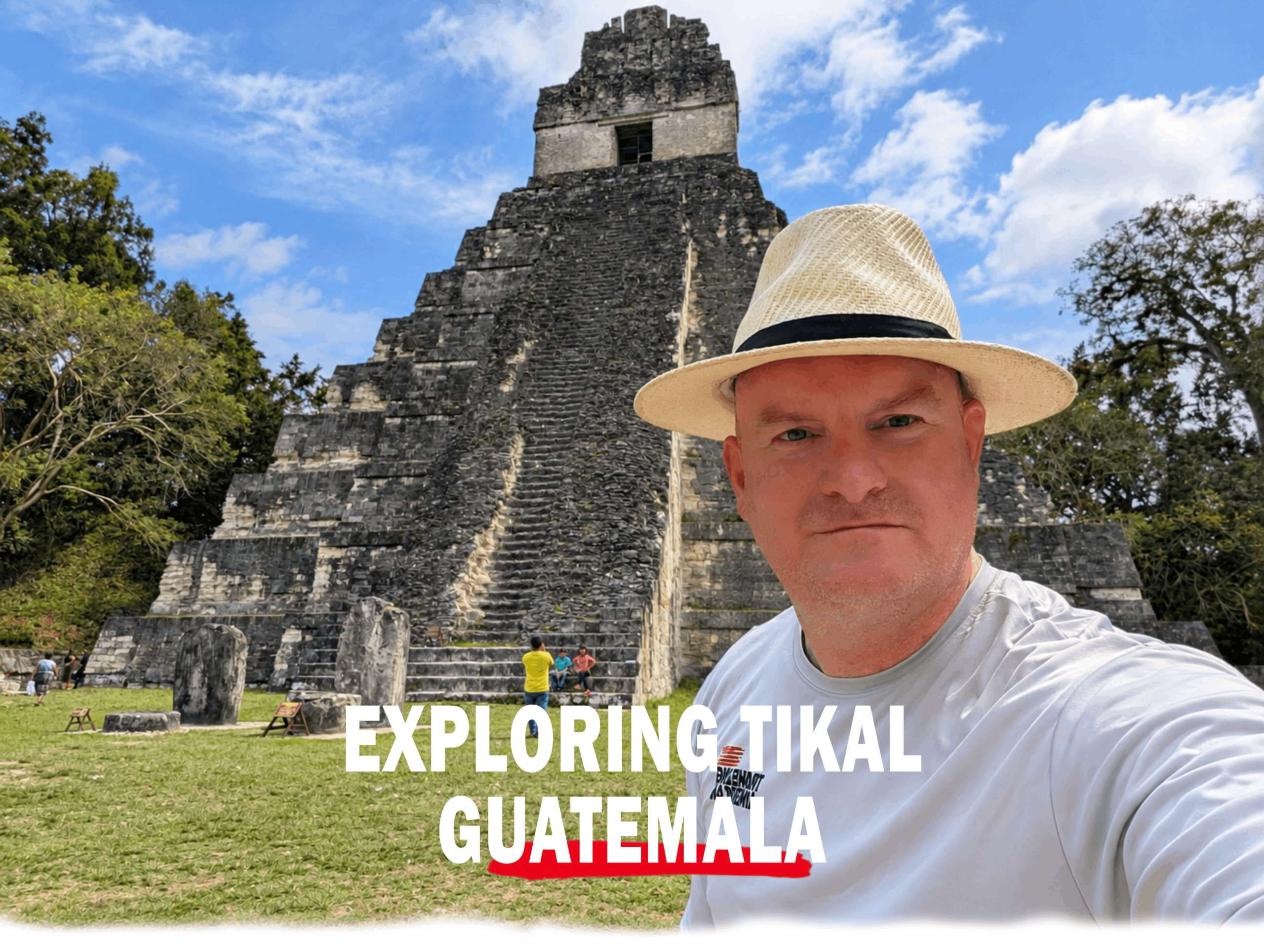
Tikal Travel: Driving From Guatemala City to the Ruins
Tikal Travel: Driving From Guatemala City to the Ruins

Published: March 15, 2026
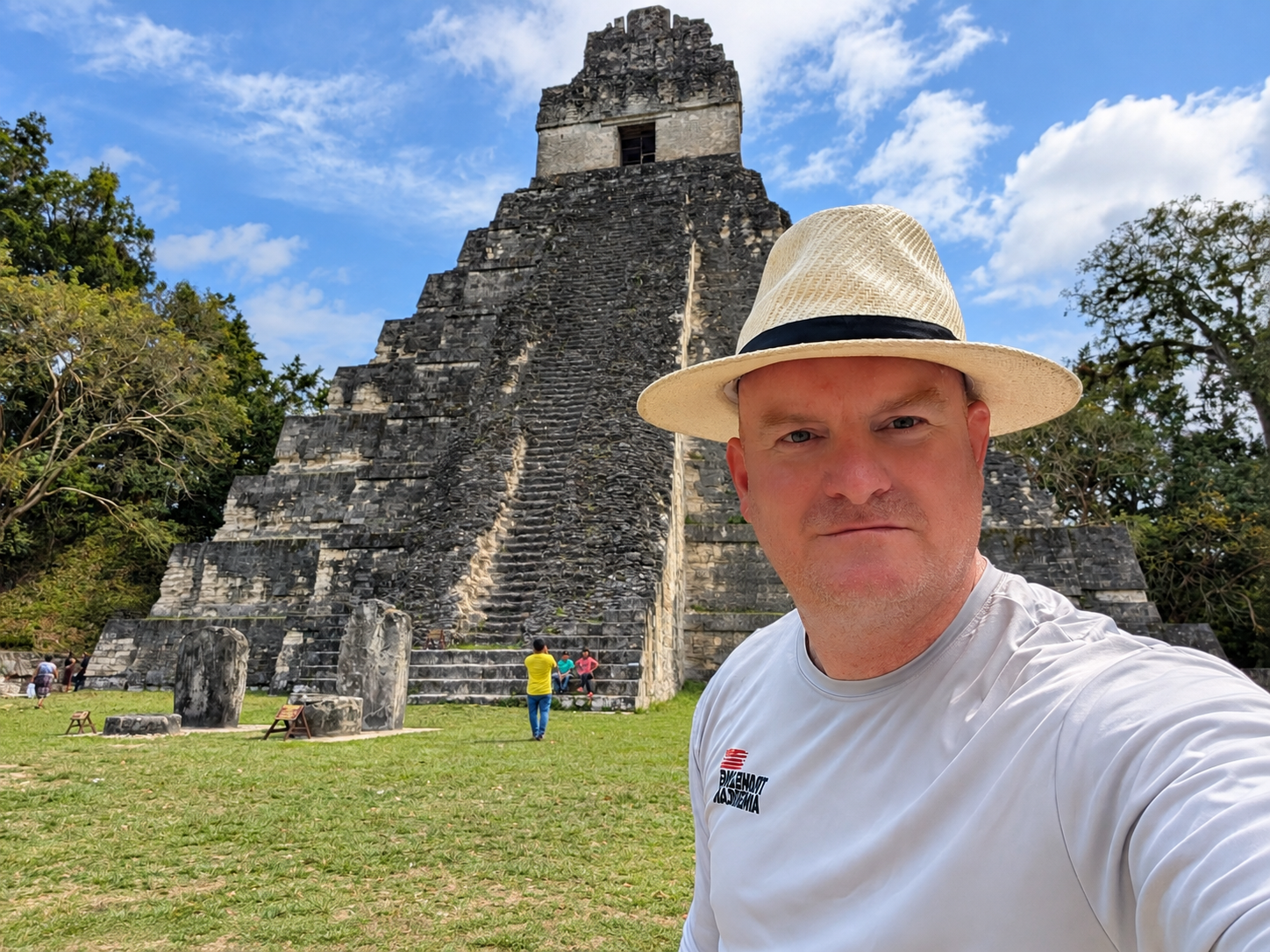
My Tikal travel adventure started with a $188 round-trip ticket to Guatemala, but the ancient ruins aren’t what I think about first. I think about eating eggs and tortillas off the trunk of a rental car while strangers across the street smiled and waved. I think about a woman near Flores pouring rum with us on her deck. I think about a security guard snapping to attention at 1:00 in the morning. The ticket was $188 round-trip per person on JetBlue. By the time we returned home, we’d spent approximately $450 per person for the entire five-day trip, including airfare, accommodations, transportation, food, drinks and archaeological sites. Four of us landed in Guatemala City: me, Ron, Jamie and Bruce. We rented a small car and drove north. This is what it cost, where we ate, where we slept and what I’d do differently.
Before You Leave the Airport
We landed at La Aurora International Airport in Guatemala City around 1:00 in the afternoon.
Immigration can set the tone for your first few hours in a country. Sometimes you walk straight through. Other times you start wondering if you accidentally filled out paperwork to move there permanently.
Guatemala was easy. It took about 30 minutes, the line was short and it was one of the better immigration experiences I’ve had.
Then I did what I do every time I land somewhere new.
Get a local SIM card. Get local money. Worry about everything else later.
The SIM cards at the airport were about $10. I don’t want to spend my first days hunting for Wi-Fi every time I need directions or have to message an Airbnb host. I also exchange about $200 into the local currency. The airport rate isn’t the best, but when I walk out into a country I’ve never been to, I want a working phone and enough cash to get myself out of trouble.
I told everyone to do the same.
Ron and Jamie did. Bruce looked at the $10 and the exchange rate and passed on both. He figured he’d find a better deal somewhere else.
So three of us walked out with working phones and quetzales. Bruce walked out with neither.
He did find a SIM card later that day at a Claro store. It took him about 45 minutes. It had taken the rest of us about five.
Saving a few dollars isn’t always saving money.
Ron has traveled with me for years, so he knew what he’d signed up for. Jamie and Bruce had never traveled with me before.
That would matter almost immediately.
The Rental Car and the Insurance Surprise
Getting the car was more complicated.
I booked through Travelocity with Fox Rental Car. The reservation was almost suspiciously cheap: $35.36 for four days, plus $6.23 in taxes and fees.
Then we got to the insurance.
I had already bought coverage through Travelocity. The rental counter wouldn’t accept it. That turned into a long discussion while we tried to figure out what they required before they’d hand over the keys.
I had to call Travelocity on the phone and canceled the policy. Finally, I got my refund and bought the rental company’s collision coverage for $65. That brought the real cost to $106.59 for four days.
The whole thing took more than an hour.
I feel that this is a scam that the car rental company runs to make sure you buy their policy at a high cost.
Fox was listed as an airport rental, but the car wasn’t sitting outside the terminal. After the counter, we rode a shuttle about 20 minutes to the lot.
Then we saw the car.
I had reserved a full-size. What we got was a four-door I’d call midsize at best. Four adults, four people’s bags and a lot of Guatemala ahead of us.
It was going to be tight.
Still, the car ran, we had the keys, and by about 3:00 we were ready to go. We’d spent an hour and a half getting it.
If you’re planning to drive to Tikal, the base rate really is cheap. The lesson isn’t that the price was fake. The lesson is that the counter in Guatemala didn’t accept insurance from a booking site. Now I wait and buy coverage at the counter.
Our First Taste of Guatemala at Shucos Los Buenos
I’d done the hard part. We had our rental car, and now I needed food. Fortunately, I already knew where I wanted to go.
Before leaving for Guatemala, I’d spent time researching local food and watching Mark Wiens explore Guatemala City. One place caught my attention: Shucos Los Buenos, a neighborhood restaurant serving one of Guatemala’s most popular street foods, the shuco.
A shuco is Guatemala’s version of a hot dog sandwich, although calling it a hot dog doesn’t really do it justice. The bread is toasted on a grill, filled with meat and dressed with sauces and toppings. It’s inexpensive, filling food that has become a staple of everyday life in Guatemala City.
This was exactly the kind of place I wanted to visit.
When we arrived, it was everything I’d hoped for. Nothing fancy, nothing designed to impress tourists. Just a neighborhood restaurant filled with people taking a break from their workday. Construction workers, painters and road workers were sitting down to eat, and we found ourselves right there among them.
That’s what I love about places like this. We weren’t sitting in a restaurant catering to Americans, paying tourist prices for a watered-down version of Guatemalan food. We were eating what the locals ate, paying the same prices and sharing the same space.
We ordered three shucos for the four of us to share.
Now, not everyone appreciated my choice of restaurant.
Bruce didn’t enjoy them at all. This simply wasn’t his kind of food. Jamie managed to eat about half of one before deciding she’d had enough.
That left Ron and me to finish everything.
Ron has an iron stomach, much like mine. We’re both willing to try just about anything, and we appreciate good food regardless of how or where it’s prepared. Watching the cook grill the meat, toast the bread and put everything together right in front of us made the experience even better.
For me, the best part wasn’t just the food. It was being able to bring my guests into their first real Guatemalan neighborhood restaurant, sit among people going about their everyday lives and experience a little piece of the country the way locals do.
We hadn’t visited our first archaeological site yet, but we’d already experienced something I came to Guatemala looking for.
Museo Miraflores: What Was Under Guatemala City
After lunch we drove about 15 minutes to Museo Miraflores, an archaeology museum built around the ancient city of Kaminaljuyú.
Parking confused us. We circled the mall twice before figuring out that you park inside the mall’s garage. We climbed to about the fourth floor, found a space and walked down through the mall. If you’re driving, use the garage and save yourself the laps.
That route also took us past a Claro store, which is where Bruce finally bought his SIM card.
Admission was about $6. They told us to take the elevator to the top floor and work our way down. The museum was much better than I expected. There was pottery, jade, carved stone and a mural where, once you stopped and really looked, you could pick out feet, hands, eyes, water symbols and a serpent. Some of the artifacts were in remarkable condition.
One of my favorite exhibits covered the Maya ballgame. They had a rubber ball you could actually hold, and it weighed about five pounds. Reading about an ancient ballgame is one thing. Holding that much rubber and imagining keeping it moving with your body makes it real.
Farther down, an archaeological lab sits behind glass. You can stand outside and watch researchers work with artifacts. I spend a lot of time at archaeological sites, but I usually see the finished product, already excavated, cleaned and placed in a case. Here you could see part of the work happening.
The basement is what got me. You walk into the burial section of Kaminaljuyú and see human remains beneath glass. Outside is a modern city of malls, traffic and restaurants. Down here are people who lived in this valley long before any of it existed.
That changed how I saw Guatemala City.
Before you leave, go back and look at the large model under the glass floor near the entrance. It shows how the ancient city fits into the one around it today.
We spent about an hour and 45 minutes here, from roughly 4:15 to 6:00 p.m. If archaeology interests you, give it at least an hour and a half. Go before you head toward Tikal. It gave me context for almost everything I was about to see.
Dinner Off the Trunk
By the time we left the museum, it was getting late and we still needed dinner.
We found a tiny chicken place on the way to our Airbnb. Nobody spoke English, so we basically told them we’d take whatever they were serving. For about $2 a plate, we left with chicken, refried beans, cheese and tortillas.
We reached the Airbnb around 8:30 p.m. Finding it wasn’t easy. Nothing outside told us we’d arrived, so we leaned on GPS. Then someone opened a large gate and waved us in. We drove the rental car inside, and the gate closed behind us.
A security guard stayed there all night.
In a busy city where parking can be a headache, having the car a few steps from our rooms behind a locked gate was worth a lot to me.
The stay cost $37.30 for three rooms for four people. It was basic. No air conditioning, and the hot water had to be switched on by hand before we could use it. Bruce and Jamie each took a room. Ron and I shared one with two beds.
We weren’t in Guatemala to spend time in a hotel.
So we never went inside to eat. We opened the food on the back of the rental car, stood there with a couple of beers and ate chicken, beans and tortillas off the trunk while the guard watched the gate.
It had been a long first day. This was more my speed than any hotel restaurant.
The next morning, the same guard was still there. We packed the car, squeezed it back through the narrow entrance and headed north.
Tikal was still a long way off. I had no intention of driving straight there.
Breakfast Beside the Road
Breakfast came first. We hadn’t eaten much the night before.
We found a small place on a corner across from a police station. I hadn’t researched it. We were hungry and saw people cooking, so we stopped. With my broken Spanish, I managed to order four breakfasts to go.
The husband made coffee and chopped vegetables while his wife worked the stove. About 15 minutes later, we had eggs, tortillas and the rest of breakfast packed up.
We didn’t eat in the car. We opened everything on the trunk and ate standing beside the road. That’s something I do a lot when I travel. I’d rather stand outside, see what’s happening and talk to people than sit in a car eating. A few locals looked over, smiled and waved.
Before we left, I shot a short video of the restaurant. If a little family-run place treats me well, I’ll do what I can to send somebody else through its door.
Why the Drive Took All Day
Google Maps will tell you how long it takes to drive from Guatemala City to Flores. It doesn’t know how I travel.
Ron was 73. Sitting in a small car for hours wasn’t comfortable for him, and I don’t like driving straight through anyway. So about every 45 minutes to an hour, we stop. Usually to split a beer. Sometimes for a food stand we see. Sometimes just to get out of the car and see what was around us.
That’s why I don’t build a trip around three big meals a day. If I see something cooking beside the road, I want to try it. We might eat four or five times before dinner, eat a little, talking laugh with the locals and keep moving.
You learn more about a country that way than you do staring through a windshield for seven hours.
Our first big stop that day was Quiriguá. It sat about 200 kilometers from Guatemala City on CA-9, a few kilometers off the highway near Los Amates, so it fit into the drive without a big detour.
It was also the first major Maya site Ron, Jamie and Bruce would see on this trip.
For me, that made it almost as interesting as the ruins.
Quiriguá: Our First Maya City
About five hours from Guatemala City, we turned off the main road and reached the Archaeological Park and Ruins of Quiriguá. This was our first major archaeological stop on our Tikal travel adventure, and it gave Ron, Jamie and Bruce their first opportunity to explore an ancient Maya city. Quiriguá is a UNESCO World Heritage Site and one of the most remarkable surviving examples of ancient Maya stone carving. The city is famous for its enormous stelae, towering stone monuments covered in intricate carvings that record the history, mythology and political achievements of its rulers. Some of these monuments stand more than 20 feet tall. Stela E, one of the site’s most famous monuments, rises about 25 feet above the ground. Another 10 feet is buried beneath the surface, bringing the stone’s total length to roughly 35 feet. It remains one of the most impressive carved stone monuments of the ancient Maya. What makes these monuments even more impressive is that the Maya carved them without iron or steel tools. The detail is extraordinary, especially when you consider how long these stones have stood in the Guatemalan climate. Several of the monuments are protected beneath large thatched roofs, allowing visitors to get close enough to appreciate the carvings while helping preserve them from the weather. For Ron, Jamie and Bruce, this was their first opportunity to experience an ancient Maya archaeological site. Watching them walk among the enormous monuments was part of what made the stop memorable for me. We continued exploring the grounds and eventually reached the Acropolis, where partially uncovered structures and ancient stone steps offered a different perspective on the city. Some areas had been excavated and restored, while others still seemed to blend into the surrounding jungle. I particularly enjoy archaeological sites like this because they give you a sense of what explorers encountered before the ruins were fully uncovered. There were very few other visitors during our time there, so we could explore without feeling rushed or crowded. We spent approximately two hours at Quiriguá, walking among the monuments, exploring the Acropolis and taking photographs. Eventually, we returned to the rental car and continued north toward Flores. We still had a long drive ahead of us, but as we’d already discovered, some of the best experiences in Guatemala happened when we stopped along the way.
Roadside Chicken, Cold Beer and Pineapple
North of Quiriguá, we got back on CA-9 and kept going until we reached the turn for Flores and Tikal. Somewhere along that stretch I saw something familiar. A small fried chicken stand.
I’ve eaten at places like this all over Central and South America. There’s no dining room built for tourists and no reason to study a menu for 20 minutes. There’s a man in a greasy apron standing over hot oil. That’s usually all the information I need.
We stopped and ordered two pieces of chicken and fries each. While he cooked, we walked to a nearby store and bought a couple of beers each. Then we came back, picked up the food and ate.
Jamie loved it.
This was her first trip with me, and she told me she’d never eaten anything like it. Watching her face was better than the chicken. That’s why I stop at places like this. You can plan museums and ruins months ahead. You can’t plan the guy beside the highway making fried chicken.
From there we turned north on CA-13 toward Flores. The farther we went, the more the landscape changed. Then Bruce spotted pineapples for sale on the side of the road.
Bruce loves pineapple.
A woman and her daughter, who looked about 15, were selling them. We bought two, and they started cutting them up with a machete. In a few minutes, the pineapples were cleaned, chopped and handed to us in bags.
Bruce and I started eating in the front seat and barely stopped.
By the time we finished, we’d eaten so much fresh pineapple that both of our mouths were sore.
Then we kept driving toward Flores.
It had taken all day to get there, but that was the point. The drive wasn’t dead time between Guatemala City and Tikal. It was becoming the trip.
Arriving in El Remate at 1:00 a.m.
We arrived in El Remate, near Flores, at about 1:00 in the morning after driving through the night. By then, everyone was exhausted and ready to get out of the car. However, finding our Airbnb became one last problem. The address Airbnb provided was three entire streets away from the actual property. We drove around in circles looking for it, but there was no way we were going to find the place using the address we’d been given. (You can find the correct location here.) Eventually, I messaged the woman who managed our Airbnb through WhatsApp. Instead of trying to explain the directions, she had to wake up, get on her motor scooter and come find four tired Americans sitting in a rental car with all their luggage. Once she reached us, we followed her scooter through the streets to the correct address. We parked the car, unloaded everything and carried our luggage inside. After spending the entire day on the road from Guatemala City, we had finally made it to our Airbnb near Flores.
The Airbnb in El Remate Felt Like Camping With Walls
The Airbnb cost us $63 USD, and it was unlike most places I’ve stayed. It was rustic, but I liked it immediately. The building had wooden floors and walls beneath a corrugated metal roof. Thin wooden partitions divided the sleeping areas, although they didn’t reach the ceiling. Each narrow room contained a simple bed with a mosquito net hanging above it. The front and back of the building were open, allowing air to move through the entire place. We didn’t have electricity until morning, but as long as we had running water, we were fine. It felt more like camping with walls than staying in a hotel. Jamie had one specific goal for the entire Tikal trip: she wanted to sleep in a hammock. When she spotted one on the deck, she claimed it immediately. While the rest of us took the small rooms, Jamie settled into her hammock for the night. Once we got our bags inside, Ron and I wanted a drink. I asked the owner if she had any ice. Then I asked if she wanted a drink too. She did. We made rum and Cokes, although calling them rum and Cokes might be generous. They were probably 80 percent rum. Instead of disappearing into our rooms, we stayed up talking with her. She told us about natural medicines, local beliefs and her life in Guatemala. That’s one of the reasons I enjoy staying in places like this. A nicer hotel might have offered air conditioning, better walls and a more comfortable shower. But we probably would have checked in, closed the door and never heard any of her stories.
Tikal Travel: Driving From El Remate to the Ruins
The night was short. We woke up at 6:00 a.m. and left the Airbnb at 7:00. Before getting on the road, we walked across the street, where a woman had set up a roadside food stand beneath a tent. Plastic tables and chairs surrounded her cooking area, with chicken sizzling over a charcoal grill and pots sitting over the fire. She was preparing chicken and pork ribs for breakfast, with sides that included macaroni salad, potato salad, French fries and corn. Coffee was available too. A plate of chicken cost about $4 USD. The pork cost about the same, so naturally, we tried both. Everything was fantastic. I would go back for the ribs alone. Now, I need to explain something. I hate macaroni salad. I’ve never liked it, and it’s certainly not something I’d normally order for breakfast. But this was, without question, the best macaroni salad I’ve ever eaten in my life. I couldn’t believe how good it was. That’s one of the reasons I enjoy eating at roadside stands. You never know when somebody cooking beside the road is going to make something better than anything you’ve had in a restaurant. The place was filled with locals, and I could see them watching us from the corners of their eyes while we ate. They kept smiling, and I got the impression they were proud to see four Americans enjoying their food. Meanwhile, enormous chickens wandered around the tables looking for something to eat. These were some of the largest chickens I’d ever seen. Every few minutes, one would get too close, and we’d have to gently push it away with our legs. The woman accepted cash only, another good reason to carry Guatemalan quetzales when traveling outside the major tourist areas. After finishing our chicken, ribs and coffee, we returned to the rental car and began the hour-long drive north toward Tikal. The road was in excellent condition, and very few cars were heading in the same direction. We didn’t stop along the way. By this point in the trip, all of us were exhausted. We’d been sleeping only a few hours each night, waking early and spending long days on the road. But nobody was going to sleep through this drive. Tikal was the pinnacle of the trip. As we got closer, the energy inside the car began to change. Everyone was tired, but everyone was getting excited. We’d driven across Guatemala for this moment, and we were finally about to reach it.
TIKAL TRAVEL TIPS: BUY YOUR TICKETS BEFORE YOU GO
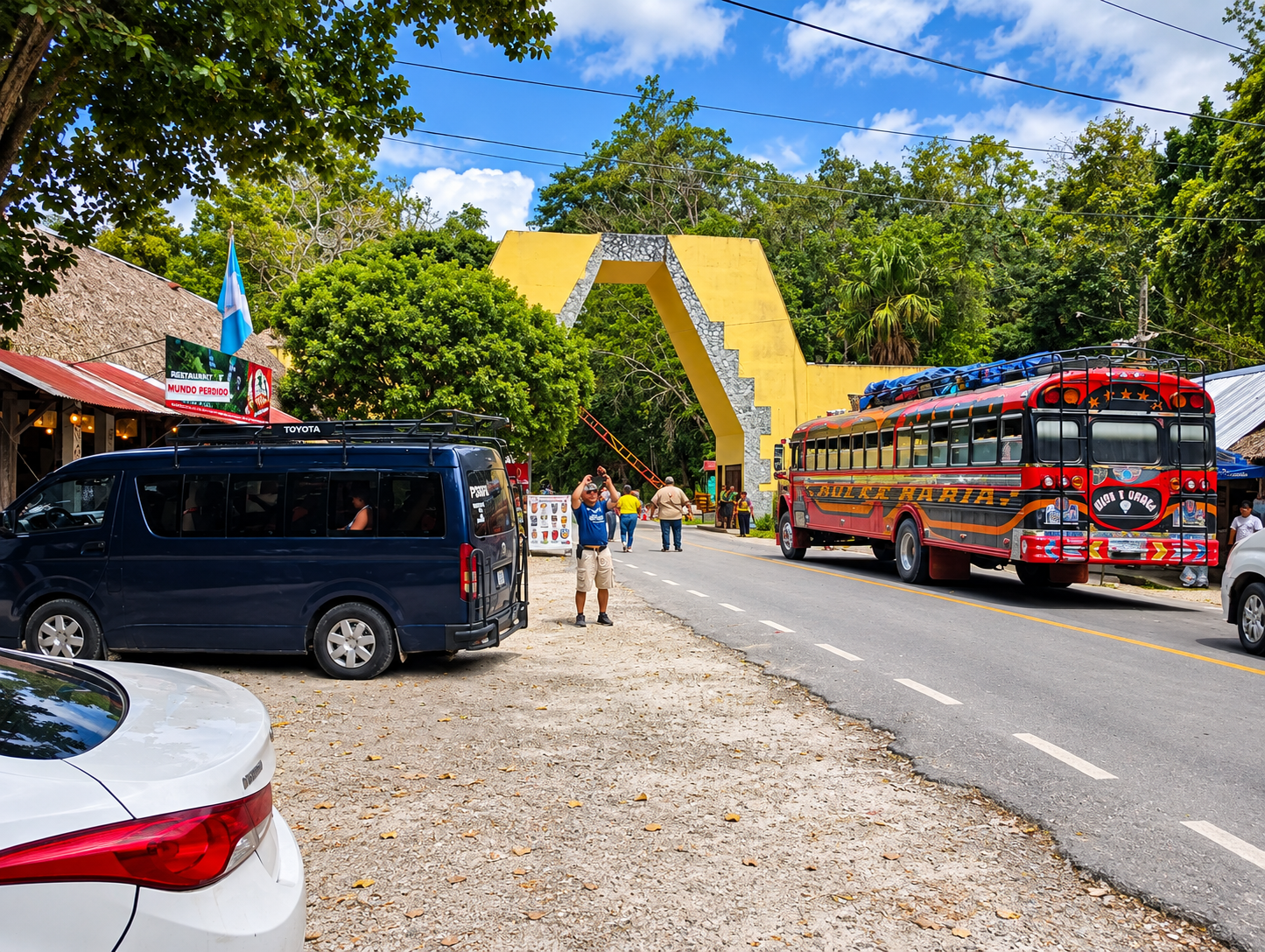
If I did it again, I’d buy the tickets online before leaving. As of October 2026, regular admission to Tikal costs Q150 for foreign visitors. Sunrise and sunset tickets cost an additional Q100 each, while admission to Uaxactún costs Q50. These are separate purchases, and sunrise or sunset visits require an authorized guide. Prices can change, so I recommend checking the official Tikal ticket website before your trip rather than figuring everything out at the entrance. As we got closer to Tikal, the empty road disappeared. Traffic came to a complete standstill, and we joined a long line of cars waiting to enter the park. While everyone waited, local tour guides walked alongside the line, offering advice, answering questions and asking drivers whether they had already purchased tickets. That is how we met Hector. We hadn’t been able to purchase our tickets online before arriving. Hector explained that we could buy them at the ticket stall and offered to walk me over. One thing surprised us. During our visit, only one person from each group could approach the ticket window. Even though all four of us were paying separately, I had to collect everyone’s money and purchase the tickets for the entire group. Hector stayed with me for roughly 30 minutes. He waited off to the side while I handled the purchase, made sure I received the tickets we needed and then escorted me back to the rental car. By the time we returned, Ron, Jamie and Bruce had already gotten out. We parked beside one of the local gift shops in an area filled with small souvenir stands. Ron and Jamie were already digging through the merchandise, looking for things to buy. We hadn’t even entered Tikal yet, and they were already shopping. I understood how the system worked. Hector was a local guide, and offering tours was how he made money. But I had researched Tikal extensively. As an amateur archaeologist with a particular interest in Mesoamerica, I’d studied this place long before the trip. I didn’t automatically assume we needed a guide. What impressed me was that Hector never gave us a hard sell. After helping us, he said goodbye and walked away. He didn’t pressure us, follow us through the gift shops or try to convince us that we couldn’t visit Tikal without him. I met back up with Ron, Jamie and Bruce and told them, “This Hector guy is pretty on it.” We agreed that his knowledge and attitude had earned our trust. So we found him and offered him $40 USD to guide all four of us. Tikal is enormous. You can follow the trails and find the major temples on your own, but finding a pyramid and understanding what you’re looking at are two different things. Then Hector told us about Uaxactún, another ancient Maya city about 23 kilometers north of Tikal. Getting there meant taking a dirt road deeper into the Maya Biosphere Reserve. I hadn’t come all the way to Guatemala to hear about another ancient city 23 kilometers down the road and skip it. So we purchased the additional Uaxactún ticket for $6.55 USD per person and headed north. I highly recommend adding this site to your itinerary. Our day at Tikal had just gotten a lot longer.
Uaxactún: The Ancient Maya City Beyond Tikal
One of the biggest surprises of our Tikal travel adventure was discovering Uaxactún, an ancient Maya city that hadn’t originally been part of our itinerary. Thanks to Hector, we ended up traveling another 23 kilometers into the jungle to explore a place I might otherwise have missed. When we arrived, it felt completely different from Tikal. There were ancient temples, carved stone monuments, grassy mounds hiding structures that hadn’t been fully uncovered, and almost no tourists. We could walk around and listen to Hector without competing with crowds. Uaxactún is one of the most important archaeological sites in the study of Maya civilization. Excavations beginning in the early twentieth century helped establish a pottery timeline used to date discoveries throughout the Maya lowlands. The city is also known for its Group E architectural complex, traditionally associated with observing the sun’s movements throughout the year.
The Spring Equinox and the Living Maya Village
Hector stopped beside one of the stone monuments and explained how people still gather here around March 21 for the spring equinox. He pointed toward the temples and described the traditional interpretation of how the rising sun aligns with the structures. According to Hector, thousands of visitors come for ceremonies, music and dancing, with some staying overnight. He also told us that people bring crystals and other personal objects to place near the monuments, believing the sunlight and ceremonies can charge them with spiritual energy. I was standing beside one of those stelae while he explained it. Looking around at the nearly empty grounds, it was difficult to imagine the same place filled with people celebrating throughout the night. Uaxactún isn’t just an archaeological site. It’s also a small village where people continue to live. Hector told us that a bus leaves at 6 a.m. and returns at 4 p.m., connecting residents with larger communities. We didn’t see a conventional grocery store, and he explained how families make use of the surrounding forest for everyday needs. As we walked, Hector pointed out trees and plants used in traditional medicine. One tree, which he called something that he called the fat pepper, was traditionally used for dental problems because of its reported ability to prevent infection. I couldn’t identify the species, but I enjoyed learning how people continue to use knowledge of the forest passed down through generations.
Exploring the Ruins with Hector
We explored ancient stairways, temples and stone monuments, with Hector explaining what we were looking at. Some structures were still covered in vegetation, a reminder that the jungle is constantly trying to reclaim the city. And here’s something I cannot stress enough: wear good boots if you visit Uaxactún and Tikal. This is not a place for Crocs or sandals. Moisture and algae make the ancient stone steps dangerously slippery. I was wearing combat boots and still nearly fell down one of the stairways. For a moment, I thought I was about to sacrifice myself to the Maya gods. Fortunately, I caught myself but Ron did not. Thankfully, he wasn’t hurt. But seriously, wear sturdy footwear, watch your footing and only climb structures where visitors are permitted. What I enjoyed most was having so much of the place to ourselves. We could stop, take photographs and listen to Hector without feeling rushed. I also enjoyed seeing Jamie connect with the Indigenous history around us. Looking back, I wish we’d spent more time here. If I return to Guatemala, I’d consider dedicating at least half a day to Uaxactún. I’d also love to experience the spring equinox festival and see the village come alive with visitors and ceremonies. Eventually, we climbed back into our rental car and headed south toward Tikal. We still had the Great Plaza, the towering temples and our sunset visit ahead of us, but Uaxactún had already become one of the highlights of our trip.
Exploring Tikal: The Ancient Maya City in the Jungle
By the time we returned from Uaxactún, we were running late. Our Tikal travel plans had already changed considerably, and we’d spent so much time exploring the ruins to the north that we weren’t going to have enough daylight to see everything we wanted at Tikal. At Tikal, you first purchase your tickets, then drive farther into the park to the parking area before walking to the archaeological entrance. We were already at that entrance when we realized we needed the extended-hours tickets, so we had to sort that out before continuing. Something unexpected happened while we were there. People had gotten the impression that we were archaeologists and YouTubers with Traveling American. Suddenly, visitors wanted photographs with us. Before long, a small crowd had gathered around our group, taking pictures and treating us like celebrities. I wasn’t expecting that at the entrance to an ancient Maya city, but it was a pretty entertaining way to start the afternoon.
Tikal Travel: Walking Into the Great Plaza
Once we entered, we walked roughly a quarter of a mile through the jungle before making a turn that brought us into the Great Plaza. And there it was. After all the planning, the flights, the rental car problems and the long drive across Guatemala, we were finally standing in the heart of Tikal. The first thing that struck me was the size of everything. Enormous Maya temples rose around the plaza, with ancient buildings and ceremonial structures in nearly every direction. You can study these places for years, look at hundreds of photographs and watch documentaries, but none of that prepares you for standing there yourself. The howler monkeys were screaming somewhere in the surrounding jungle. Their calls echoed across the plaza, adding to the feeling that we had stepped into another world. I’d heard them the night before in El Remate, but hearing them while surrounded by ancient Maya temples was something else entirely. There was also life happening all around us. Maya spiritual practitioners were conducting ceremonies, friends were taking group photographs, and visitors were standing quietly, looking up at the temples. It wasn’t an abandoned city in the way I had imagined. People were still gathering here, still conducting ceremonies and still finding meaning in a place that had been important for centuries. I stood there looking around, trying to take it all in. This was why we’d come to Guatemala.
Above the Jungle: The Star Wars View
After spending time in the Great Plaza, we continued along the trails toward one of Tikal’s elevated temple viewpoints. We climbed the wooden stairway to the top, and when we turned around, the view was incredible. The jungle stretched out in every direction. Above the treetops, two of Tikal’s enormous temples rose into the distance. Everything else seemed swallowed by the forest. If that view looks familiar, there’s a reason. It appeared in the original 1977 Star Wars film, A New Hope. The filmmakers used Tikal’s temples rising above the jungle to represent the Rebel Alliance’s base on the fictional moon of Yavin 4. Standing there, I was looking at one of the most recognizable landscapes in science-fiction history. But the archaeology was far more impressive than the movie connection. As we walked between the temples, we passed large grassy mounds rising from the forest floor. To someone unfamiliar with archaeology, they might look like ordinary hills. But many of them conceal ancient structures that have never been fully excavated. Every time I passed one, I wanted to know what was underneath. How many rooms were still buried? What carvings might be hidden inside? What would archaeologists discover if they started excavating? It’s tempting to wonder why they haven’t uncovered everything, but excavation takes enormous amounts of funding, research and conservation work. And once a structure is exposed, it needs to be protected from the same jungle environment that has covered it for centuries. For someone who loves archaeology as much as I do, walking past those untouched mounds was almost as exciting as seeing the enormous temples that had already been restored.
A Moment Worth the Journey
We took group photographs at the elevated viewpoint and spent time watching the afternoon sun slowly sink toward the jungle canopy. We didn’t stay there for the final moments of sunset, but I didn’t need to. Sitting above the trees, looking toward the Great Plaza and those ancient temples, I already had the moment I’d come to Guatemala for. Eventually, we had to start walking back. The sun was disappearing, and the jungle was getting dark fast. We hadn’t brought flashlights, so we relied on what little light we had to find our way along the trails toward the main entrance. Trust me, you don’t want to be wandering around the Guatemalan jungle after dark without being able to see where you’re stepping. If you’re planning a sunset tour at Tikal, put a flashlight or headlamp in your backpack. It’s one of those things you might not think about until you really need it.
Why Our Tikal Travel Guide Was Worth Every Dollar
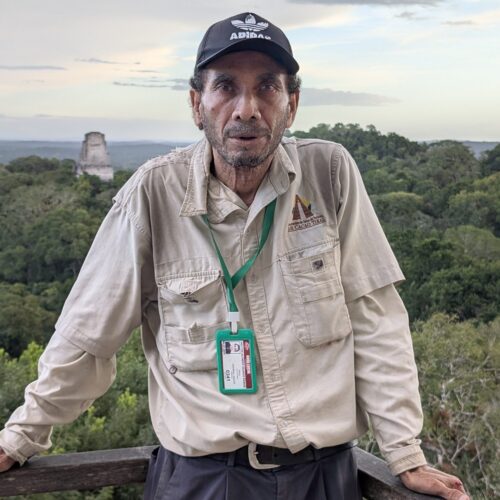
By the time we finished exploring Uaxactún and Tikal, Hector had spent much of the day with us. What started as a chance encounter in a line of cars had turned into one of the best decisions we made in Guatemala. He knew the smaller paths, the overlooked places and the history behind the ruins. More importantly, he understood how we liked to travel. He never rushed us, and he gave us time to explore, ask questions and take photographs. We’d originally agreed to pay him $40 USD to guide all four of us. But after everything he’d shown us, that didn’t seem like enough. So we started digging through our pockets to see what we could come up with. Between the four of us, we managed to put together $80 USD, twice what he’d originally asked. Hector was worth every dollar. He was knowledgeable, patient and genuinely passionate about Maya history. If you’re visiting Tikal, I recommend hiring a knowledgeable local guide. You can explore the ruins on your own, but having someone explain the history and take you beyond the main tourist areas made a tremendous difference for us.
HECTOR (TIKAL FIXER) | WHATSAPP NUMBER | 502-5420-2801
The Long Drive Back to Guatemala City
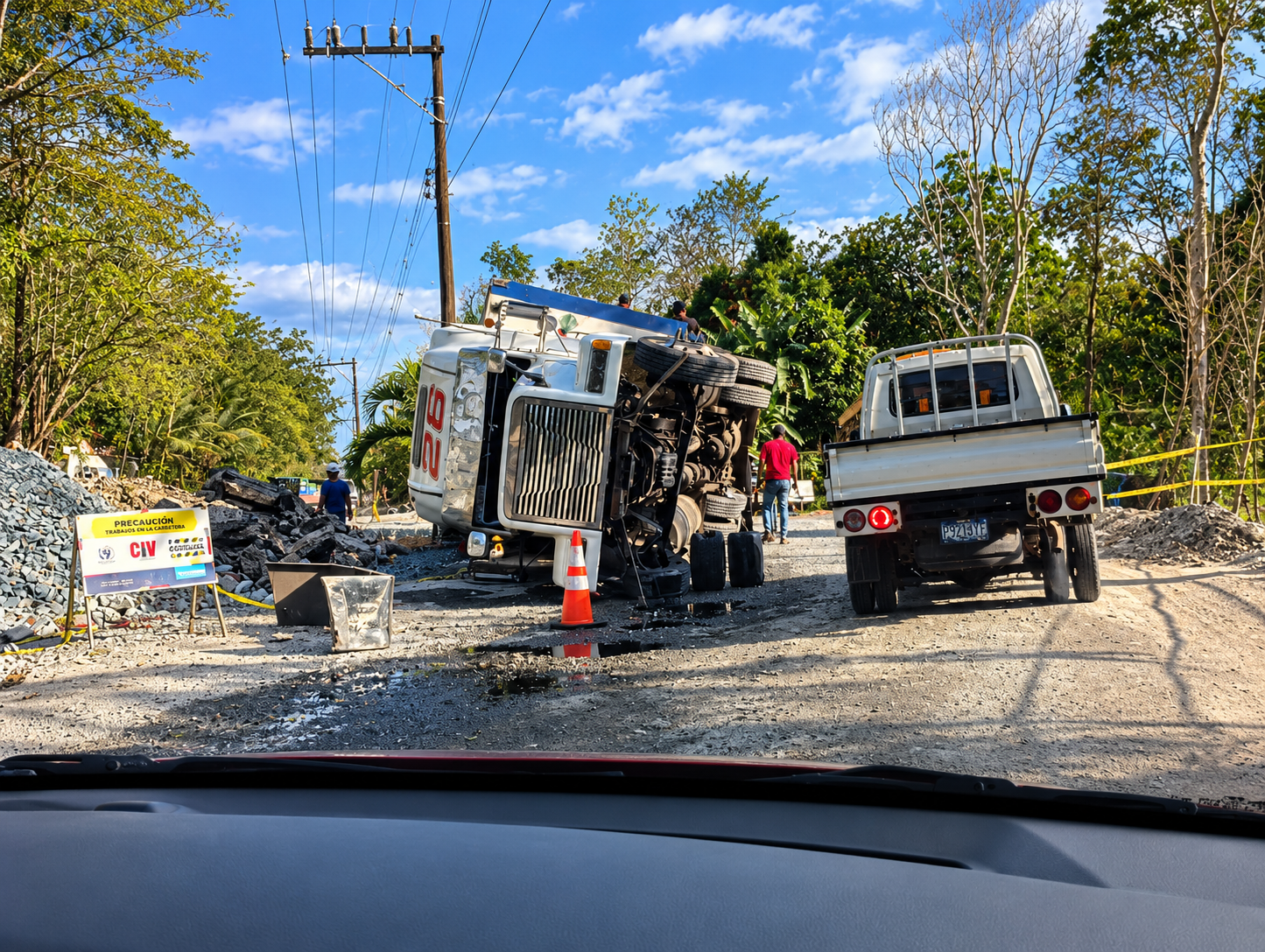
After spending the day exploring Tikal and Uaxactún, we spent the night at a different home in El Remate. The following morning, we began the long drive south toward Guatemala City. There wasn’t much on our schedule other than getting back, stopping for food and enjoying whatever we found along the road. Everything was going fine until traffic came to a complete stop. We sat there for what felt like forever. Nobody was moving, and there was no indication of when the road might reopen. Eventually, Ron and I got out of the car and sat around the back of it. I walked about a block up the road, bought a beer for us to split and brought it back. We sat on the car drinking it while we waited. That’s when I heard the horn of the 18-wheeler behind us. I turned around, and the truck driver was laughing and waving for me to come over. When I walked up to his cab, he reached into an ice chest, pulled out a cold beer and handed it down to me. “Very good! Very good!” he said in broken English, laughing. Then he pulled out another beer for himself. So there we were, stuck in the middle of Guatemala, sharing a beer and laughing with a truck driver we’d never met. He was sitting high above us in his cab, while Ron and I stood beside the road. We didn’t have much of a conversation because of the language barrier, but we didn’t really need one. After a couple of hours, traffic finally started moving, and we discovered what had caused the backup. An 18-wheeler hauling beer had wrecked while crossing a bridge. The cab had flipped onto its side, and the container was left hanging off the bridge. Workers were unloading cases of beer, apparently trying to salvage as much of the cargo as possible before clearing the road. Of all the things that could have stopped traffic for hours, it was a truckload of beer. We’d spent part of the delay drinking beer with another truck driver, only to discover that beer was the reason we were stuck there in the first place. You couldn’t have planned that if you tried. Eventually, we got past the accident and continued south. Naturally, we stopped at the same fried chicken stand we’d visited on the way north. Jamie had been talking about that chicken ever since we first tried it. This time, all she wanted was the fried chicken skin. Apparently, the crispy skin alone was worth driving across Guatemala for. By the time we reached the Guatemala City area, it was around 1:00 in the morning. We were exhausted, but we still had to find our final Airbnb. And that turned out to be another story entirely.
THE Last Night in Guatemala: The Motorcycle Clubhouse
Our final Airbnb was a place called “Jacuzzi and Billiards at Home, to Relax and Enjoy.” After the day we’d had, all we wanted was a place to sleep. The Airbnb was inside a gated neighborhood surrounded by high concrete walls. When we pulled up, the security guard was asleep. We had to wake him, and between my broken Spanish and his limited English, explaining why four Americans were showing up in the middle of the night wasn’t easy. Then I showed him the address. His entire attitude changed. He snapped to attention, started calling me “sir” and immediately opened the gate. I had no idea why he suddenly became so formal, but I wasn’t going to argue with him. We drove inside and found a neighborhood that looked surprisingly similar to something you’d see in the United States. Then we reached the house. This wasn’t the little hostel or basic Airbnb we’d been staying in during the rest of the trip. It was enormous, with a three-car garage, a huge kitchen, a living room with a pool table and even a jacuzzi. I started looking into the property and came away with the impression that it was associated with a motorcycle club and possibly used as a clubhouse. Suddenly, the guard’s reaction at the entrance made a little more sense. Maybe he thought we were members arriving late. I don’t know what he thought, but I found the whole experience pretty funny. We finally got to bed sometime after 1:00 in the morning, knowing we still had one archaeological stop to make before leaving Guatemala.
Kaminaljuyú: Our Final Archaeological Stop in Guatemala
On our final morning in Guatemala, we headed to Kaminaljuyú, an ancient Maya archaeological site surrounded by modern Guatemala City. We’d visited Museo Miraflores at the beginning of the trip, where we’d seen artifacts, burial displays and exhibits explaining the history of this ancient settlement. Now we were going to see part of the actual city. Kaminaljuyú was once one of the most important settlements in the Guatemalan highlands. Its history stretches back more than 2,000 years, long before Tikal reached the height of its power. Much of the ancient city has disappeared beneath modern development, but several surviving structures remain protected within the archaeological park. We arrived on a Saturday, and there was quite a bit happening. Maya spiritual practitioners were conducting ceremonies, a reminder that these places continue to have religious and cultural significance today. We also came across a group of approximately 50 students taking a guided tour. We joined them and listened as their guide explained the history of the site and the structures around us. One thing that stood out was how different Kaminaljuyú looked compared with Tikal and Uaxactún. Here, several excavated structures were protected beneath large roofs, helping shield the ancient earthen architecture from the weather. These weren’t the towering stone pyramids we’d spent the previous day exploring. They represented another part of Maya history, preserved in the middle of a modern capital city. Standing there, I thought back to our first afternoon at Museo Miraflores. We’d started the trip looking at artifacts from Kaminaljuyú inside a museum. After driving across Guatemala, exploring Quiriguá, Uaxactún and Tikal, we were finishing the journey at the archaeological site where many of those stories began. It was a fitting final stop. We still had to return the rental car and catch our flight home. And as it turned out, getting that car back to the rental company would be one last challenge.
Returning the Rental Car: One Last Guatemala Adventure
After leaving Kaminaljuyú, we headed toward La Aurora International Airport to return the rental car and catch our flight home. We’d driven across Guatemala, explored four major Maya archaeological sites and somehow managed to get our little rental car through every rough road we’d encountered. You’d think returning it would be the easy part. It wasn’t. The rental company operated from a location away from the airport terminal, and we couldn’t figure out where we were supposed to return the vehicle. We drove around the airport repeatedly, following Google Maps and looking for the correct entrance. Every time we thought we’d found it, we ended up somewhere else. We spent nearly an hour trying to find the return location. By then, I was starting to worry that we might miss our flight. Normally, whenever I rent a car in another country, I drop a pin in Google Maps at the exact entrance to the rental facility before driving away. That way, when it’s time to return the vehicle, I can navigate directly back to the same spot. For some reason, I hadn’t done that this time. And it cost us almost an hour. Eventually, we found the correct location, returned the car and made our way to the airport. Despite the insurance problems at pickup, the smaller-than-advertised vehicle and the frustrating return, I’d still rent a car again for a trip like this. We paid $106.59 USD for four days, and splitting that cost between four travelers made it extremely affordable. More importantly, having our own transportation allowed us to stop at roadside restaurants, visit Quiriguá, explore Uaxactún and experience parts of Guatemala we would have missed on a direct flight to Flores.
My advice is simple: before leaving any rental car facility, save a Google Maps pin at the exact entrance where you’ll need to return the vehicle. Don’t assume the address on your reservation will take you to the correct gate.
I normally follow that rule. This time I didn’t, and Guatemala made sure I remembered why.
What Our Tikal Travel Adventure Actually Cost
One of the biggest misconceptions about Tikal travel is that visiting Guatemala’s ancient Maya ruins requires an expensive vacation. Our five-day trip, including airfare, rental car, accommodations, food and admission fees, cost approximately $450 per person. Our round-trip JetBlue flight from New Orleans to Guatemala City cost $188 per person. The rental car cost $106.59 for four days, which came out to less than $27 per person when we divided it between the four of us, before gasoline. We also saved money by sharing Airbnbs and eating at local restaurants and roadside stands. Lodging for all four nights came to $319.51 for the four of us, or about $79.88 per person. Our first night in Guatemala City cost just $37.30. The rustic place in El Remate, the one that felt like camping with walls, was $63. The next night we moved to a different home in El Remate for $106.23, and our final Airbnb in Guatemala City cost $112.98. Some of the best meals we ate during the entire trip cost only a few dollars. We spent money on archaeological admissions, including Tikal and Uaxactún, and hired Hector as our guide. He originally agreed to guide us for $40, but we appreciated his work so much that we ended up giving him $80 altogether. Of course, the $450 is an estimate, not an itemized accounting of every meal, beer or entrance ticket. Airfare, accommodations and admission prices can change, so your expenses may be different. Traveling with four people made a significant difference. We divided the rental car and lodging expenses, which allowed us to spend more of our money on experiences rather than transportation and hotels. For approximately $450 per person, we explored ancient Maya cities, traveled across Guatemala, met local people, ate incredible food and experienced places that I had wanted to visit for years. And we did it in five days.
What Guatemala Taught Me
I came to Guatemala for Tikal. I’d spent years studying the ancient Maya, and standing in the Great Plaza, surrounded by temples that had stood for more than a thousand years, was something I’d wanted to experience for a long time. Tikal didn’t disappoint. Hearing the howler monkeys echo through the jungle, watching Maya spiritual practitioners conduct ceremonies and looking out over the rainforest from an ancient temple were experiences I’ll never forget. But when I think back on those five days, some of my favorite memories happened nowhere near an archaeological site. I remember eating breakfast off the trunk of our rental car while locals smiled and waved. The woman outside Flores made the best macaroni salad I’ve ever tasted, even though I normally hate macaroni salad. Jamie discovered roadside fried chicken, Bruce ate so much fresh pineapple that his mouth hurt, and a Guatemalan truck driver handed me a cold beer while Ron and I waited for a wrecked beer truck to be cleared from the road. At our Airbnb in El Remate, I sat drinking rum and Cokes with our host while she talked about life in Guatemala. Hector started as a stranger offering his services at the entrance to Tikal and ended up showing us places we probably would have missed on our own. Most of all, I remember sharing the experience with Ron, Jamie and Bruce. Four people crammed into a rental car, running on very little sleep, stopping whenever something caught our attention and somehow managing to see an incredible amount of Guatemala in five days. Would I do things differently next time? Absolutely. I’d buy my Tikal tickets online, give Uaxactún at least half a day and plan our drive north so we could reach El Remate before dark instead of rolling in at 1:00 in the morning. But I wouldn’t trade the way we traveled for a more comfortable or predictable vacation. We ate where the locals ate, stayed in places that weren’t always comfortable, talked to people we’d never met and took roads that led us somewhere unexpected. Tikal was everything I’d hoped it would be. But Guatemala gave us much more than ancient ruins. The ruins gave us a destination. The people along the way gave us the trip.
