
Exploring Leon Nicaragua
Leon Nicaragua Travel Guide

Published September 14, 2026
When I leave Managua, I usually head toward Leon. Other cities in Nicaragua have their own reasons to visit, but Leon is where I prefer to stay. This León Nicaragua Travel Guide is not built around a checklist of attractions. Leon makes more sense from a plastic chair beside a street-food cart, a rooftop overlooking the city, or the summit of an active volcano with a wooden board in your hands.
The city has adapted heavily to international tourism. You will find hostels, restaurants, bars, tour companies, and travelers from around the world. At times, Leon feels more influenced by Western travel culture than other parts of Nicaragua. However, it has not surrendered its own identity in the process. Colonial churches rise above crowded markets. Revolutionary murals occupy walls near restaurants serving international visitors. School bands practice late into the evening, while vendors cook hamburgers beneath streetlights. Beyond the city, a line of volcanoes controls the horizon.
Leon gives travelers enough familiarity to feel comfortable. Then it offers the opportunity to do something completely unreasonable, such as sliding down an active volcano at 40 miles per hour.
History, Markets, and Street Food in Leon
Leon ’s story began somewhere else. Spanish colonists founded the original city in 1524 near Momotombo Volcano. A volcanic eruption damaged the settlement in 1578, and an earthquake struck the final blow in 1610. Residents abandoned the location and rebuilt Leon several miles away.
Today, the Ruins of León Viejo preserve the original streets and remains of 17 colonial structures. UNESCO considers it one of the oldest Spanish colonial settlements in the Americas and an exceptional record of sixteenth-century colonial planning. The modern city grew around churches, universities, markets, and political movements. At its center stands the Cathedral of the Assumption, better known as Leon Cathedral. Built between 1747 and the early nineteenth century, the cathedral combines Spanish design with regional architecture.
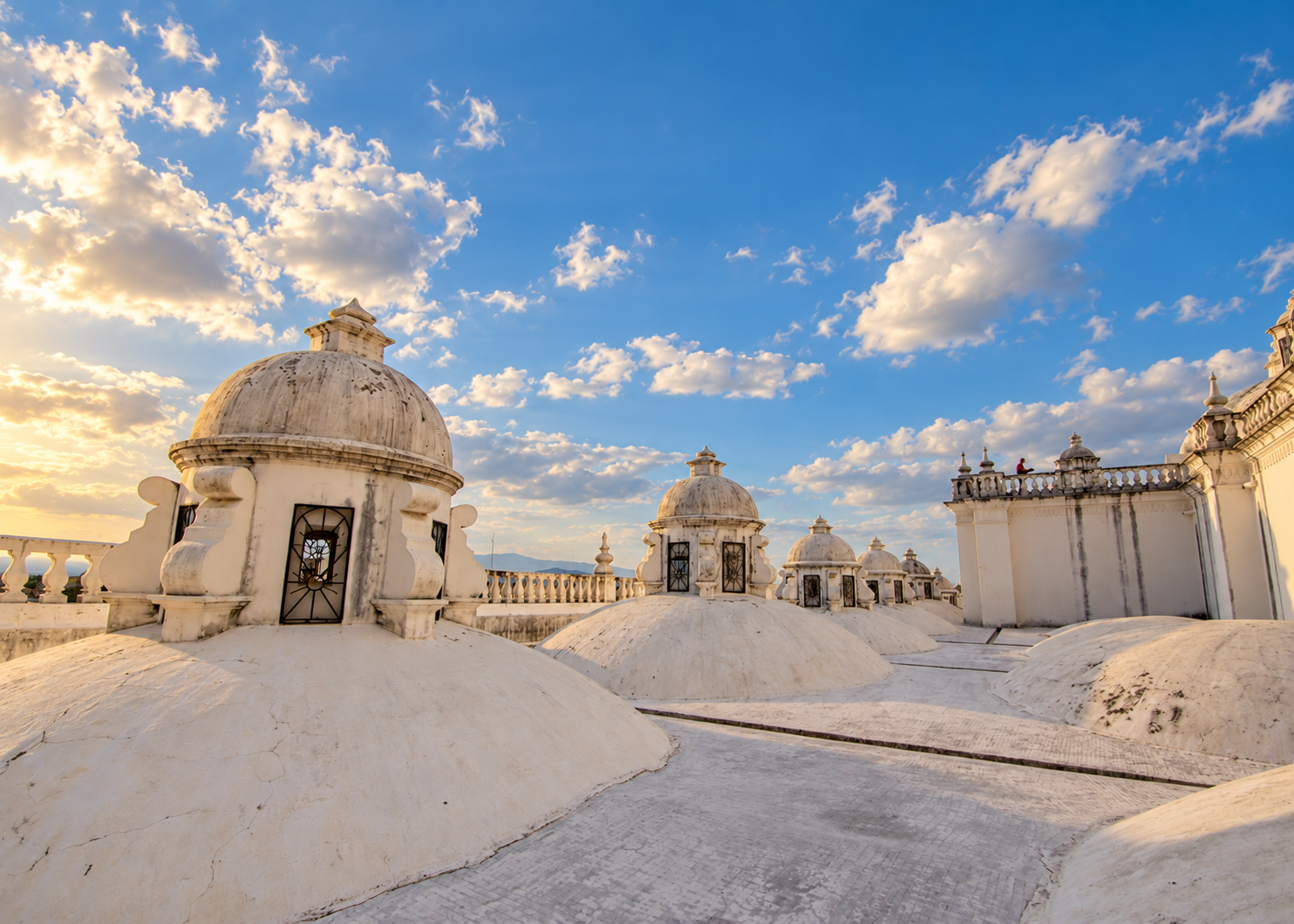
According to UNESCO’s official León Cathedral listing, the building reflects the transition from late Baroque to Neoclassical architecture. Its low, thick towers also reflect the region’s history of earthquakes. Rubén Darío, Nicaragua’s most celebrated poet, is buried inside the cathedral beneath the statue of a lion. Entry into the cathedral itself is free. However, one of its best features sits above the sanctuary. Ask the security guard about rooftop access and pay the small admission charge, which was only a few dollars during my visit. The guard will direct you toward the entrance and explain where to go.
Visitors may need to remove their shoes to protect the white surface, so follow the instructions provided at the cathedral. Once on the roof, you can walk among white domes and look across Leon ’s churches, tiled buildings, and surrounding volcanoes.
The cathedral deserves attention, but Leon’s history does not remain politely contained inside old buildings. Murals, monuments, and political symbols recall revolution, conflict, religion, and national identity. Here, the past does not feel finished. It remains part of the street.
Travelers interested in the city’s history can also visit:
- The Rubén Darío Museum, located in the house where the poet spent part of his childhood.
- The Museum of the Revolution, which examines Leon ’s role in the Sandinista Revolution. Many tours rely heavily on personal testimony, so visitors should distinguish firsthand accounts from independently documented history.
- The Museum of Traditions and Legends, housed in a former prison and focused on Nicaraguan folklore and the building’s darker history.
- The Ortiz-Gurdián Foundation Art Center, which displays art inside restored colonial buildings.
- La Recolección Church, known for its elaborate yellow Baroque facade.
- El Calvario Church, another colorful religious landmark within Leon ’s historic center.
History explains part of Leon ’s appeal. Still, some of my favorite experiences begin after the museums and churches close. The city’s markets seem endless. Vendors fill narrow passages and crowded sidewalks with produce, clothing, household goods, prepared meals, and nearly everything else a person might need. After returning to Leon several times, I began recognizing vendors and making friends with people working in the markets.
That changes how a city feels. You stop moving through it as an anonymous visitor. Familiar faces appear, conversations become easier, and the market starts feeling less like an attraction and more like a neighborhood. At night, León changes again. Food stalls line up beside one another, each working from a grill, cart, or small patch of pavement. Smoke rises beneath electric lights. Meat strikes hot metal, bottles open, and customers gather around the vendors they trust.
Some of the best hamburgers I have eaten in Nicaragua came from those street stalls. They did not arrive on expensive plates with a complicated story about the ingredients. They came directly from a hot grill beside a busy street, usually accompanied by a cold beer and a plastic chair.
That was enough. My favorite taco stop is Al Rinconcito Mexicano. Leon has plenty of restaurants created for international travelers, but some of its best food still comes without polished dining rooms. At places like this, the food matters more than the furniture. For breakfast, another place I have used is Don Payos Meal’s and Coffee. Current information about the business is limited, so travelers should verify that it is open before going.
One evening, I sat with a beer and watched people pass through the city. Around 9 p.m., I heard a school band practicing near a church in the distance. Music drifted through the streets while vendors continued cooking and families moved through the market. Nobody had arranged the moment for tourists. Leon was simply carrying on with its night. Those ordinary scenes often reveal more about a place than its major landmarks. A tour can show you where history happened. Sitting quietly on a street corner lets you see how people live now.
Where I Stay in Leon
I have stayed at Hostal Zaragoza three times. It operates as a hostel and Airbnb-style rental, while its central location keeps restaurants, markets, churches, and bars within easy reach. However, one practical detail keeps bringing me back: parking. Driving and parking in León can become difficult. The streets stay busy, available spaces can be hard to find, and parts of the surrounding area look worn down. At Hostal Zaragoza, I parked my rental car directly in front of the property.
During my stays, a security guard remained there 24 hours a day. He locks the property’s gate at night and watches the area where my vehicle was parked right at the front door. That arrangement alone made the property worth booking. I never experienced a problem or felt concerned about leaving the rental car outside. Hostal Zaragoza also has washing machines and dryers available for a small charge. Guests can wash and dry their own clothes or pay the staff to handle everything through the property’s in-house laundry service.
That option becomes more valuable than it sounds. Ron and I reached Leon around the fourth day of our trip. By then, we had accumulated several days of sweat, road dust, and dirty clothing. For a few dollars, we could reset our luggage instead of carrying damp clothes into the next part of the journey. Laundry will never appear on a list of León’s great adventures. Nevertheless, clean clothes on the fourth day of a Central American road trip can feel like a minor luxury. Security arrangements, laundry prices, and other services may change. Therefore, travelers should confirm those details with the host before booking. After three stays, however, Hostal Zaragoza has consistently given me a convenient base in Leon.
Where I Drink in Leon
Ron and I also have a rooftop bar that we visit when we are in the city. Bar El Mirador – Terraza sits on the third floor beside Cancha 23 de Julio. From the terrace, Leon takes on a different character. Tiled roofs, church towers, and aging facades stretch beneath the sky. Somewhere beyond them sit the volcanoes that have shaped the landscape and occasionally punished the people who built near them. We order rum and Coke, settle into our seats, and watch the city move below. For some reason, the rum tastes better there than anywhere else.
Nicaragua produces this amazing rum that is called Flor de Cana but I am not convinced the bottle deserves all the credit. Maybe it is the rooftop, the warm air, or the satisfaction that comes after another day on the road. Perhaps it tastes better because nobody is asking us to be anywhere else. Sometimes a drink tastes like its ingredients. Sometimes it tastes like where you earned it.
Volcano Boarding Cerro Negro with Volcano Day
Ron is my father-in-law, travel partner, and willing accomplice in almost every bad idea I have had for nearly 20 years. I come up with something unreasonable. Ron agrees to do it. Neither of us spends much time asking whether we should. We have traveled around the world this way, and we plan to continue this nonsense until one of us dies. Period.
At 73, Ron may appear unassuming, but underestimating him is a mistake. He has the stamina of someone in his thirties and rarely allows age to make decisions for him. Therefore, when I suggested climbing an active volcano and riding a wooden board back down, Ron treated it as though I had proposed a normal afternoon.
Volcano Day Tours is one of my favorite adventure companies in Nicaragua. Leon has several operators offering volcano excursions, but they do not all attract the same crowd. Some companies lean toward younger backpackers and a college-party atmosphere. Volcano Day felt more organized, relaxed, and family-friendly. It is the company I would feel comfortable using with my own children, provided they met the age requirement.
Travelers who want a louder party environment may prefer Bigfoot Hostel and Volcano Boarding. Bigfoot operates its own volcano tours and is known for a younger party-hostel atmosphere. If you are brave enough, ask about the fermented chili shot.
Ron and I chose Volcano Day. Our morning began at ViaVia León, a hostel, restaurant, and gathering place in the city. Volcano Day operates from inside ViaVia, which served as the meeting point for our Cerro Negro excursion. We ate breakfast there before joining the other travelers for the briefing. The guides explained the schedule, equipment, bus ride, climb, and descent. Once everyone understood the plan, we boarded the bus outside ViaVia for the approximately one-hour ride to Cerro Negro.
Its name means “Black Hill,” which sounds harmless until you see it. The dark cone rises abruptly from the green countryside outside Leon. According to Visit Centroamérica’s Cerro Negro profile, the volcano first appeared during an eruption in 1850. That makes it the youngest volcano in Central America. It reaches approximately 728 meters above sea level and last erupted in 1999.
Our bus stopped at the park’s guard station, where we purchased entrance wristbands. Afterward, we continued to the bottom of the volcano and collected our bright yellow protective jumpsuits, goggles, and wooden boards.
Every rider had to get a board to the summit. We could carry them ourselves or pay a local porter $10 to carry one. Ron hired someone. I carried mine. Ron made the better decision. The board did not feel especially heavy at the bottom. However, it became heavier with every step across the loose volcanic gravel. Anyone uncertain about carrying a board should spend the extra $10. It supports a local worker and makes the climb considerably more enjoyable.
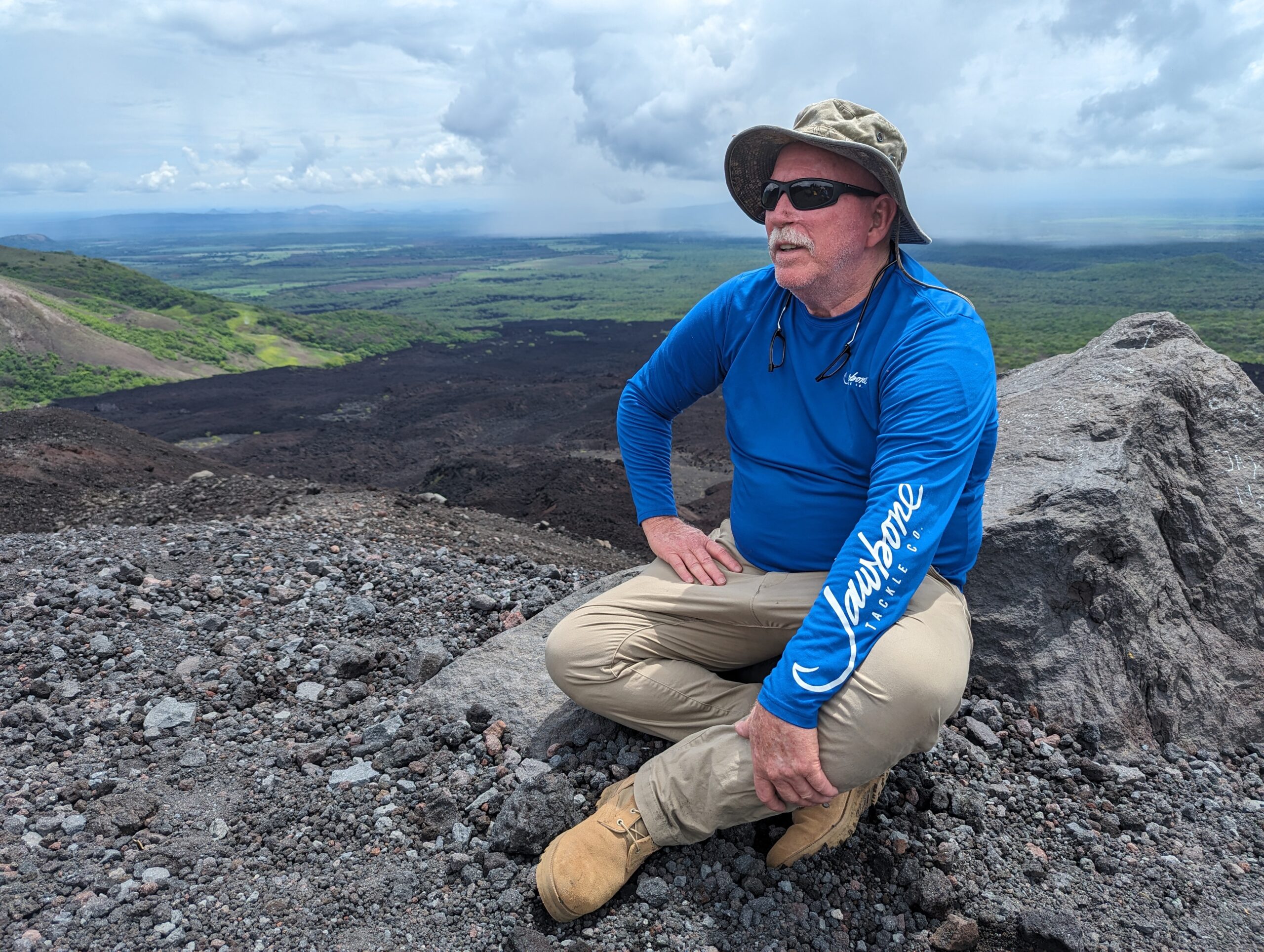
The route slowly circled the cone as we climbed. Our guides stopped three or four times so the group could rest, drink water, and learn about different parts of the volcano. Those breaks also gave us time to look across the black slope toward the green countryside below. Near the summit, the weather changed. Rain moved across the volcano, and clouds surrounded us like heavy fog. One moment, we could see across the landscape. The next, we were walking through gray mist on top of an active volcano.
Cerro Negro is a cinder cone with a primary summit crater and additional crater formations and vents created during different eruptions. The Smithsonian Global Volcanism Program documents its repeated eruptions, changing crater walls, rockfalls, and volcanic vents.
We walked around several crater formations before approaching the boarding slope. Then the guides divided us into two lines and sent riders down one at a time. From the bottom, volcano boarding sounds simple. Sit on the board, grip the rope, lean back, and use your feet to control your speed. From the top, it looks like a quick way to question every decision that brought you there.
The guides told us that riders could approach 40 miles per hour, depending on their weight, body position, surface conditions, and how much they used their feet as brakes. When my turn arrived, I sat on the board, raised its front edge, and waited for the signal.
Then I held on for dear life. Black sand and volcanic gravel struck my goggles and yellow jumpsuit as the board gathered speed. My face covering kept most of the grit out of my mouth, while the goggles allowed me to keep my eyes open. Soon, the slope occupied my entire field of vision. We had spent nearly an hour reaching the summit. The descent took only minutes. At the bottom, everyone gathered near the landing area and removed their yellow suits. Covered in black dust, we posed for a group photograph. It was part evidence and part celebration.
Once the final rider finished, the bus returned us to ViaVia. Ron and I stayed for several celebratory beers and shots with people from the group. More importantly, we left with new friends. We remained in contact with some of the people we met for the following year. Several hours of eating, riding, climbing, resting, and waiting had turned a bus full of strangers into a temporary expedition team. By the time we returned to Leon, everyone had survived the same questionable idea.
Leon Nicaragua Travel Guide and Volcano Tips
The park entrance wristband and optional $10 porter were separate expenses. Prices and inclusions can change, so travelers should verify the current details through the official Volcano Day volcano-boarding page before booking. I communicated with them through WhatsApp. You will need to wear closed-toe hiking shoes or boots with dependable traction. The route crosses loose volcanic gravel that shifts beneath your feet. Sandals and flimsy shoes will make the climb harder and less secure.
Additionally, bring a face scarf, or another secure covering that will easily protect your nose and mouth. I packed my head wrap hat I used in the desert. Ron didn’t bring anything so fortunately, I stopped at a shop and purchased Ron a woman’s scarf the from the stores next door. Without a face covering, volcanic sand and small rocks will strike your mouth throughout the descent and you will be completely blind going down. Eye protection matters just as much. Volcano Day supplied goggles during our tour, and its current information says protective goggles remain included. Flying volcanic grit can make it impossible to keep your eyes open, so secure them before starting.
Travelers should also bring at least one liter of water, sunscreen, a hat, and clothes they do not mind getting dirty. Carry enough cash for the park entrance and the porter. Volcano boarding involves a real genuine risk. Although Ron completed the excursion at 73 without difficulty, age alone does not determine whether the tour is appropriate. Balance, mobility, heat tolerance, and moderate physical fitness matter more than the year printed on someone’s birth certificate.
Volcano Day charged us $25 each for the Cerro Negro excursion. The price included:
- Round-trip transportation from ViaVia
- A wooden volcano board
- Protective equipment
- A guided climb
- A small bagged lunch
- Great dance music on the bus
